Why Men Do Not Go To Therapy: The Shame-Free Life w/ Ronald Zion Roseboro
00:00
And so we just muffle ourselves, although we have a stick of dynamite on the inside that is lit. And it's only a matter time before that dynamite begins to explode, not only on the inside of us to do irreparable damage, but anyone that is in the vicinity of us, in the home, on the job, they will feel the aftermath of the explosion.
00:25
Welcome back to the Speaking and Communicating podcast. I'm your host, Roberta Ndlela. If you are looking to improve your communication skills, both professionally and personally, this is the podcast you should be tuning into. Communication and soft skills are crucial for your career growth and leadership development. And by the end of this episode, please log on to Apple and Spotify and leave us a rating and a review.
00:51
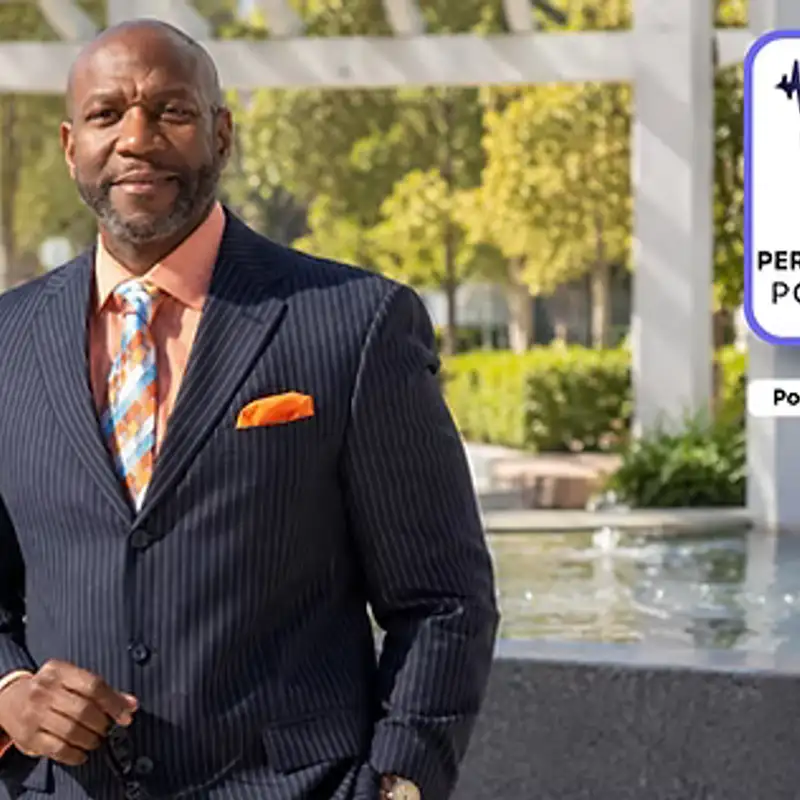
Now let's get communicating with our guest today. Joining us from North Carolina, Ronald Zion Roseboro is a certified trauma informed coach, the founder and CEO of Shame Free Life Coaching. And he is an empowerment specialist who will help us understand why it's very normal for women to seek therapy for their trauma, but quite taboo for men.
01:19
And before I go any further, please welcome him to the show. Hi, Ronald. Hi, thank you so much for having me, Reba. I'm looking forward to it. I'm looking forward to our conversation as well. Welcome to the show. Why did you get started on this line of work? In all honesty, I was the first recipient myself, even before I began my journey of academics, undergrad, graduate work, and of course, pivoting to trauma recovery.
01:49
trauma-informed coaching, I had to become my first client. Just dealing with a lot of childhood trauma, a lot of shame that I had to uncover. In coming from that particular background of not being sure of yourself, not having the confidence that you can take on the world, that you are good enough, as opposed to trying to become something that you're not in order to fit in.
02:17
into a crowd or into a group or a committee of people, only to become lost in that. I had to, you know, begin my own search as far as unraveling all of the various layers from childhood to adolescent to adulthood to get to this particular place. And I'm not saying in any regard that I am a finished product. I don't think that we will ever be finished products in the sense of
02:47
just being completely flawless without any type of corrective measures taking place. However, I do believe in healing and I do believe in not rehabilitation, but transformation of the mind, spirit, body and soul. So I had to become my first client and become a recipient before I even entertain having a client outside of myself. Yes, absolutely.
03:15
because we're a communications related podcast. When you go through so much trauma as a child, what is the internal dialogue? What do you tell yourself and what your possibilities could be based on the experiences you are having when still a child? Yes, I mean, everything begins in the timeline of being a child and what we experience between
03:44
first year of age until five years old, during that developmental period. So the identity is formed or forged, having confidence in oneself, having the autonomy to be free to engage in self-awareness and self-discovery. But when you come from an environment, and many people do, not all, but many people come from environments, and it's very subjective as far as the level of trauma that a person or a child would endure.
04:14
that it begins to form your sense of identity. It begins to basically distort it. And so you begin to question yourself. You begin to question yourself because of the things that you've had to endure. You've had to experience, you've had to witness all of that was perpetrated against you. In doing so, it changes the dynamics of your world. So you begin to internalize that you are bad.
04:44
that you are worthless, that you are a misfit in society. And so we begin to act that out. Our thoughts are basically, they determine our actions and our actions determine our results and results can have a great impact on our own character. And so we begin to identify in many regards what have happened to us. So we begin to look through the prism
05:12
or the lens of being a victim all over again and have an expectation of being victimized, of being rejected. And in my case, for many years, I would look for rejection if it was a hint of rejection or if it was a situation whereas I was not rejected at all. But it appeared to be because I was looking through the broken lenses of a child, a young adult, an adult.
05:42
who has experienced massive forms of rejection. So I would look for it. And if I didn't find it, I would make it up. So that's the distortion of the soul that I'm talking about, of having a wounded soul. Everywhere you look, you are looking for an opportunity to prove how worthless you are and how discounted you are as a man.
06:09
So you reinforce the horror movie you've already built internally. look for evidence. very good analogy, Roberta. Not only do you become the cast member of the horror story, you become the actor, you become the supporting actor, you become the writer, you become the director of the become the Tyler Perry of the whole movie. Yes, exactly. Exactly. You become Tyler Perry.
06:39
Yes. Because as you say, you look for evidence even when it's not there. Even if somebody were to say to you, Ronald, I'm not rejecting you. You did not believe it. Right. Because the narrative must remain the same until that cycle is broken emotionally. And so, yes. So sabotage is very real, whether it's sabotaging healthy relationships or
07:08
just self-sabotage begin to now indulge in chemical dependency, alcohol, excessive alcohol, drugs, various relationships, illicit relationships to escape the pain that we refuse to address. So it has many different dynamics to it. Those numbing things. And I always say things like alcohol, drugs.
07:37
they are what I call the tangible physical manifestation of, we can see them, you know, from way back when we've always known that, oh, okay, when humans are in pain, don't wanna deal with it, they turn to alcohol and drugs. But today there are so many of those intangible or should I say not so physical manifestations of things we numb ourselves with. Absolutely. You know, a person could become numb
08:07
and becoming not an alcoholic, but a workaholic. Yes. A person can become numb as far as using religion to become drunk all over again without having a personal relationship with the Most High. They actually have a personal relationship with their local assembly to feel good about themselves because they're still fighting the demons of yesteryear. You can use social media as a form of
08:36
alcohol or drugs, just scroll your life away, or just posting randomly to get likes, to get comments. And now that dopamine is being released and you're feeling very good about yourself. And so you're absolutely right. There's so many different facets when it comes to checking out, clocking out, and unfortunately in so many regards, basically being taken out by depression.
09:03
and what accompanies that, which is suicidal ideation. Yeah, very, very tragic. So how did you start to be on this track, on this journey of healing? And what was the moment that made you decide, I'm going to start doing things differently? Yeah, I don't really think that it was one moment for me or one event. I think it was a multiplicity of events that happened. It was like a process or stages of development.
09:33
I would accomplish one thing and then I saw that there was still more room to improve myself and certain things that I did not address, I thought I did address and I would have to go back and revisit that again. When I began to really look at my life in a hardcore sense, that man in the mirror and begin to look at certain aspects of my life that began in my youth and that were perpetuated and had become not just a
10:01
foothold in my life, but a stronghold in my life, that I began to forge an identity of being the life of the party because I always wanted to be accepted because I got tired of being rejected or having an array or buffet of women to prove, you know, my self-worth and that I'm desirable because I'm still trying to silence that little boy who was molested. That little boy.
10:31
who felt that he was not good enough and he could never measure up to the next door neighbor or the cousin at the family reunion. I just found myself becoming unlayered, addressing all of those issues and those concerns that were strongholds in my life because I thought that I was living, but I was not living. I was just only existing. When trauma like that happens to you as a child, do you have
11:00
adults in your family who you trust enough to not only believe that things like that happen to you, but that they advocate for you, whether there's some form of justice for the perpetrator. Do things like that at least. mean, I know that it obviously cannot erase what happened, but when you have those grownups advocating for you to fill some form of protection, does that
11:29
happen in that fashion? It should happen in that way. There should be a level of compassion and advocacy surrounding that boy. know, one in six boys have been sexually assaulted. Yeah, one in six. So the next time that you're in the market area or walking down the street, count one, two, three, four, five assault. One, two, three, four, five assault. And we mask
11:59
the reality of what happened to us behind so many different layers of public acceptance because of the internalized shame. And so it's something about shame that paralyzes us. And to your question, there should be advocacy to surround the one who was wrong to let that young man know that this was completely wrong. This was completely criminal. What happened to you is unacceptable.
12:29
but this is not who you are. But for many people, and also such as I, you don't have the support around you to undergird you psychologically and emotionally. People will say, that's bad, I'm sorry, but I never went through counseling. I never went through therapy. So I'm taking the baggage of what happened to me from seven years old or eight years old. Now I'm taking that to school.
12:58
And it's almost like a tornado that comes and rips through a neighborhood and completely destroys that neighborhood. And your home as well, a home that you put a lot of sweat equity in a home that you spent a lot of money in. And when you come back to ground zero, you see nothing but rubble and rubbish. And so what we oftentimes do as men, we don't have individuals that will surround us to gather the broken pieces.
13:28
to rebuild again. So what we do, we grab the rubbish and the rubble and we place it in a backpack and we put the backpack on weighing 250 pounds or 300 pounds of the memories that once was. And so we carry the weight of the trauma. We carry the weight of the molestation. We carry the weight of the injustice into relationships.
13:57
on our job, in the marketplace, anger issues, rage, resentment, bitterness. And so this particular weight, even though it's weighty, it becomes normal. It's completely abnormal to walk around with 250 pounds in a backpack and you're carrying it on your back day after day, month after month, and you're sleeping in the backpack.
14:26
That's very abnormal. But what's even more abnormal to think that that is normal, we oftentimes don't have individuals around us to help us pick up the broken pieces, sort it out, work it out, so we can eventually walk it out and begin to rebuild without shame, because it takes a village to raise a child. It only takes
14:54
one person to destroy a child. So we have to have all hands on deck and in many regards we don't have that as men. And as men society expects that while you carry this 250 pound backpack you must provide, you must protect others when you are not protected, you must work to build the world, all the infrastructure that we enjoy.
15:22
You must show up every single morning, do all these things while carrying this heavy backpack. Absolutely. It is unthinkable to think about your own predicament when you have to show up as a man. You have to show up for your woman and she wants you to be very vulnerable and transparent. Well, how do I do that? I don't know how to be vulnerable. And if I am vulnerable, then possibly if I let my guard down,
15:51
I will get hurt like I did at five or at seven or 16. So I have got to walk around with a Teflon heart if you want me to show up. And we have so many other mitigating factors to look at, even racism. We have to deal with that. We have to deal with the public image. You you can't cry. You you've got to man up, but we don't have a venue where we can truly speak up.
16:21
and to speak up, you appear to look weak and frail. And so we have adopted that particular narrative that's been passed down. And so we just muffle ourselves, although we have a stick of dynamite on the inside that is lit. And it's only a matter time before that dynamite begins to explode, not only on the inside of us, to do irreparable damage.
16:48
but anyone that is in the vicinity of us, in the home, on the job, they will feel the aftermath of the explosion. Yeah, closest to you. What started this whole narrative of men shouldn't cry? Is it something that starts at home when you're a boy and they say, oh, you're a big boy, don't cry, but your little sister, Roberta, it's okay for her to cry. And they say, here, come here, baby girl, you'll be okay.
17:17
Yes, you know, it's very interesting. And I'm not sure if that concept have become more fortified in the West, where you cannot show any type of emotion. I know here in the West, you can get your man card taken from you, so to speak, if you exhibit any type of emotion, if you exhibit any type of compassion. So you have to be Teflon 24 seven. And that becomes very not only burdensome,
17:46
but it's so wearisome on the soul. It is contrary to having emotions that the Most High gave us anyway. We have emotions for a reason, not to suppress them, but to express them. Now we understand that it's not wise to express certain aspects of what you're going through before everyone, because everyone may not be for you, but we have to have a particular venue where we feel relaxed and
18:16
confident enough in a place of confidentiality that we can begin to unroll and unzip the backpack of our soul and take out all of those broken pieces that we've been collecting from the youth until adulthood. But I really believe in my humble opinion that in the West, it is more fortified and expected for men to take on this masculine quote unquote persona of
18:45
not being bothered, not being shook or shaken in any regard. And if something happened to you, you you just shake it off, forget about it and move on. But with trauma, there is no moving on until you actually confront it. And there's no forgetting about it when you've been through something. Yes, there's no forgetting about it. And just they say put on your big, big apprentice and move on. There's no forgetting about it if you've been through something traumatic. Yes, absolutely.
19:15
And we medicate. We begin to medicated. You know, if you have a toothache and you have tried everything in your local market, nothing works. Then you must go to a dentist that specialize in teeth. If something is wrong with your heart, you don't go to a podiatrist that specialize in feet, but you go to one who specialize in the heart. But what happens when your soul is wounded? Who do we go to when you have emotional issues? We go to the local tavern.
19:45
We go to the local bar, we become enamored in things that are very destructive because we don't have any type of venue to talk about what is going on so we can have a proper diagnosis as a physical doctor would for our souls. So how did you get started to create this community where men can come and literally unzip the baggage within their souls? Yes.
20:12
I have an online group that I started. It's called Samson Restored. It stems from the Bible character Samson. Yes. Samson and Delilah. There's so many of us that have fallen victim to a type of Delilah. Doesn't necessarily mean that Delilah have to be a woman. Yes, it could be anything. Delilah is basically a stronghold that have us resting in its lap to find rest.
20:40
but it's really an assassin to take us out. I started this particular community because I knew that I wish I had that. I didn't have that. It's easy to talk about, well, I never had this or I never had that in growing up. Well, I think that when we see those things, then we ought to be a part of the solution and not the problem. And so I just developed Samson Restored as an online support group for men.
21:09
that we can come together as accountability partners and also encourages that we can meet one another in a form that is confidential, that is comfortable, that we have various issues or struggles or past episodes, but we have one commonality that we want to show up and be the best man possible. And so, you know, I started that online group on those basis. I really respect
21:38
people like you who say I've been through something, nobody showed up for me, but I want to be that to someone else. You don't walk around saying, oh, nobody did that for me. Why should I do it? You know what I mean? You literally turned that around and said, nobody showed up. I want to be the person who wasn't there for another person who's experiencing that right now. Absolutely. I think that that's what it should be about.
22:08
The richest place on the planet is Africa. And you will be right. Even more precious than gold, silver, rubies, cryptocurrency, and oil. The greatest investment known to man on this planet are people. And we have forgotten about that. We invest in problems, but we don't invest in people. We invest in our own purpose, and we should have our own individual purpose to justify our existence on this planet.
22:37
But the moment that we begin to live in a bubble, in a place of not insulation, but isolation, an island unto ourselves, we are really not justifying our existence as each one teach one, each one reach one, to break certain generational patterns and cycles in the next generation so that they would not have to endure what we endure. When we take on that particular mindset that we have a civic,
23:07
a communal, a spiritual mandate to be able to not only show up for ourselves, but to show up for the younger Rons, to show up for the younger Roberta's. Now we're making a dent into the patterns and destructive cycles. That's precious. Very precious. And it's funny you talk about investing in people because even corporations are discovering those who do take the time.
23:37
whether somebody brings that to their realization that if you invest in your people, you will have a way more returns than you currently having. Yes, absolutely. Absolutely. Right. Now tell us about your brick methodology. It started out as a book. Now it is a six to eight week boot camp for specifically for men. And as I gave the analogy, as far as the tornado and
24:07
wreaking havoc and tearing down a building or a home. This particular methodology is designed to help men rebuild, to take a look at the past because we cannot move forward until we acknowledge that we're stuck and where we are stuck, but to not stay there. So there's work to do. But oftentimes with us as men, we're looking for some type of not necessarily self-help book
24:37
But how do I do this? Can you take me step by step? Unfortunately, I mean, we live in a society where everything is alike. Everything is pretty much cookie cutter that everyone's talking the same narrative and the same lingo. Well, if you give me this and I'll do that, but then I want to upsell you to this $10,000 package and then a $25,000 package, that to me is so unnecessary. And that's fine if that's other people's
25:06
methodology and how they show up for other people. But I think that things can be affordable. It's almost like eating healthy. It should not cost you breaking the bank just to eat organically. Something that the creator gave you to not just sustain you, but that you may grow thereby. And I really feel that when it comes to this particular brick method, that it should be very affordable and in
25:35
intentional to bring forth results. It's not about trying to become the next sensation, but the riches and the wealth is not what I can accumulate in the bank. It's what I can accumulate in someone's soul. That's the wealth. Because like we said, the wealth is in people, is investing in people. Yes, absolutely. So you've got your Samson Restored community online.
26:05
and the BRIC methodology. You also please share with us the books that you've written. Yes. So I have written a total of nine books, but we won't get into all nine of them. But we've talked about the BRIC method. Also wrote a book called, Is There a Sampson in You? Which those who sign up, this will be one of the guides that we will use in dialogue and also developing a blueprint.
26:34
to excel beyond what we've been exposed to. There are an array of various books that I've written and all of those, as well as Sampson Restored, a movement in which you can sign up for, also have an array of eBooks that one can download and a free eBook. Thank you. with no strings attached. If you go to my website and all of this is available if you want one-on-one coaching, group coaching.
27:02
of course, Samson restored and to download the free ebook, it's entitled Lost Man. And I know that it's going to be an amazing read for anyone, whether you male or female, even though it's geared toward men. I think that women can read this to gather more intel on what we go through emotionally, psychologically, socially. That way you have more understanding about your father.
27:31
your brother, your uncle, your nephew, or your husband, your significant other. So you can go to my website and download that free ebook as well. Thank you so much for the free ebook. And you will share with us your website address, obviously. This conversation is very important because as we were saying earlier, us women, it's normal to just say, oh yeah, I've got my therapist on speed dial. But for men, it's very taboo. However,
27:59
We have men in our lives. The better we understand them and what they go through, the more connected we can feel towards them. Because as humans, we always look for connection. Yes. Sometimes it's kind of frustrating, even though I'm beginning to understand, have a decent following on social media. And the majority of my engagement are women, though my target audience are men.
28:28
It's not frustrating, but it's interesting because I really want a lot of engagement with men. do, but not to the degree as women. And I think the reason being is what you just mentioned, that women are concerned about the men in their lives. They're concerned about their mental state. They're concerned about relationships or the lack thereof. Why does he do a certain thing? Why is he inconsistent? Why is he always going back?
28:57
in the past in his mind. And so there's a reason why. So I think that many of them are trying to gain more intel, again, understanding to download this information so that they'll be able to have a panoramic view of what we go through as men. The eBooks that I have, even dealing with relationships are there at the website, theshamefreelife.com, theshamefreelife.com.
29:25
TheShameFreeLife.com. I find it interesting that you say my target audience is men and yet women are more engaged in conversations. I'm actually wondering is the reason men are not as engaged as well because they are just so accustomed to keeping things internally? Yes. You hit the nail on the head. The engagement that I get from men are sporadic.
29:52
but there's a lot of engagement that I get from men that are silent. They see it, they may not comment, they internalize it, they don't vocalize it as opposed to women. So yes, I think that there was a stigma that goes with that. Yeah, I'm kind of going through what you posted and what you're saying, but my girl may be watching and I don't want her to know anything. You my boys might be watching, they may think I'm weak.
30:20
So we put on this facade and this persona of being something that we're not in order to safeguard what we need to vacate from our lives. So I think that there are a lot of men who are in the backdrop, just checking out the territory. I definitely think so as well, because the very basis of your work is the fact that men are just not used to expressing what they go through.
30:49
They're not used to talking about their trauma and there's a stigma. Like they say, don't want my girl to see this and my friends, male friends to see this. Because if you have a female best friend as a man, she would be very interested for you to talk about this. Absolutely. It's always, especially when you go to the men, then suddenly everybody holds back and think, how do I look if I talk about my feelings or what I went through? And here's another factor to consider.
31:18
How many men don't trust men? How many men grew up in a household of domestic violence? Seeing mom disrespected, verbally abused, physically abused and assaulted, as well as the siblings, coming home to a tyrant, walking on eggshells, always berated, you're never good enough, why couldn't you make the team you got?
31:47
you'll never be anything. So there are a sector of men, I think more than we realize, and there are some good men, there are some good fathers out there, I am worse, that don't get the press that they deserve because we focus on the negativity, how be it, we still must look at the negative aspect which birth men who are dwarfed emotionally because they do not trust men because the first man in their life
32:16
left them. The first man in their life betrayed them. The first man in their life beat them. So they have developed a resistance against men. And check this out. Many of them are more comfortable in talking about their past with a woman than with another man over some cocktails or a glass of wine in your tavern or bar because you don't trust them.
32:45
Ronald Zion Roseborofrom North Carolina, theshamefreelife.com. Thank you so much for bringing this to our attention. There's so many powerful insights that you shared when it comes to men's trauma. And I'm very grateful to the women, the ones, especially on your website, who do show up for the men in their lives in that way, because as you said, even though your target audience is men, they still hold back.
33:13
Thank you so much for being here today. Thank you so much for having me. My pleasure. Don't forget to subscribe, leave a rating and a review on Apple and Spotify and stay tuned for more episodes to come.