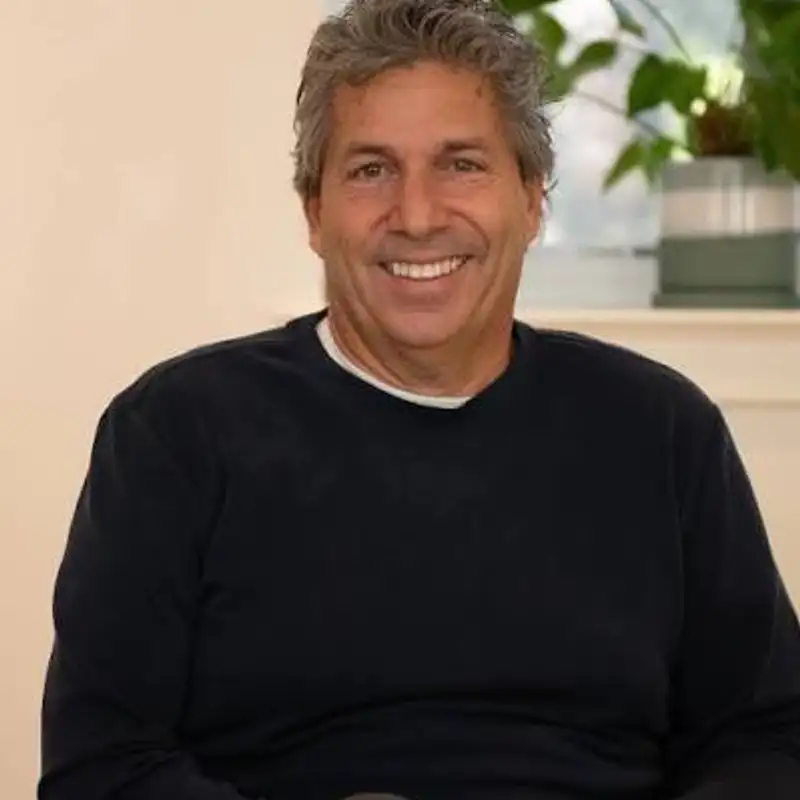
Essential Soft Skills For Young People w/ Rob Heller
00:00
I would be in training sessions around leadership or, and I'd be looking at the next person. like, they don't have the basic skills and they're 45 and we're trying to teach them now, which is great. Cause obviously you can't just write it off, but like how much better would be if they had training early on. back to the speaking and communicating podcast. I'm your host, Roberta Ndlela. If you are looking to improve your communication skills, both professionally and personally, this is the podcast you should be tuning into.
00:29
Communication and soft skills are crucial for your career growth and leadership development. And by the end of this episode, please log on to Apple and Spotify and leave us a rating and a review. Now let's get communicating with our guest today, joining us from Philadelphia. Rob Heller is the founder of Boost and he emphasizes the reason why soft skills should be taught at a much younger age and actually ask the question that we asked.
00:59
Why aren't they taught at schools? And before I go any further, please welcome him to the show. Hi, Rob. Yeah. Hi, Roberta. How are you? I'm very happy to be on here. You know, I'm on a bunch of podcasts and usually they're good people in the line somewhat with a mission, but this one's directly aligned to the things that we're talking about. So again, great work. Keep it up. Thank you so much. I'm very happy that you're here too, because I just thought, okay.
01:23
Did he make his profile based on listening to us? No, I'm just kidding. But welcome. Yes, because what you talk about, as I said, you ask the very questions that we ask, which is why I'm soft skills taught at school because basically you need to be yes, technically expert in your field to be able to do your job. But soft skills are what takes you to that next level.
01:48
Absolutely. Yeah. I mean, there's studies that say 85 % of what employers are looking for is soft skills. You know, we can teach someone the technical portion 85%, but that's really what we're looking for. So that's the stat. Why again, as you said, and I've been a big proponent, why aren't we starting younger? Why are we trying to teach soft skills when someone's 30 or 40 or 50? You know, so just, doesn't make sense. Start younger at school, at home or both.
02:15
I mean, clearly it starts with the parents. need to be the role model and model the right behavior for sure. But I think at schools, community organizations, workforce developments big. So our target market within boost is each 14 to 24. That's when their brains are wide open and that's when we can really develop the skill. Certainly should start much younger and it is being done in some elementary schools. Again, the parents are leading it, but this is really when we're getting involved at that age.
02:45
The reason I ask about the home front as well is I remember when I was growing so I was born in the 70s early 80s I start school. I remember my parents specifically coaching us and saying when there's a new kid at school or when you see someone having less because you know, you'd bring your own sandwiches. We didn't have a cafeteria like you have in America. So you bring your own sandwiches. So during lunch
03:10
You stand with a few friends in the one corner and you eat your sandwiches. And my parents would actively teach us that you reach out to the kid who's eating sandwiches alone. You bring them over to your group. Yes. I'm not sure, do parents still teach that today? Obviously that's a broad category. Certainly some parents still teach it. I think there's two things. One is it's getting harder and harder to teach because of the phone based world that they live in. And two,
03:38
Although you need to always be the role model. Sometimes, particularly when they get to be teenagers, they can tend to tune us out and not fit. That's actually why I started the boost program. My wife and I were trying to teach our three kids these skills and techniques. And sometimes it felt like they were tuning us out. So I went looking for a third party program to help reinforce the lessons we were trying to teach. And I couldn't find one. So being an entrepreneur, created it. So, um, clearly that needs to start with the parents, but
04:06
At the same time, it's like any good coach, it's always good to have other assistant coaches and other philosophies, you know, reinforcing the stuff you're Right. And when you said the age group that you deal with is the 14 to 24 year olds. So that's early teens. And I've never been a parent. So I don't know what it's like to be a parent of a teen.
04:28
But that's when a lot of parents, like you said, they feel like they no longer listen to me. They were so cute when they were young and did everything I said. Not anymore. The best is when they come to you with, oh, this works. And it's something you've been telling them for three years, but they heard it through someone else. they're, yeah, OK. That's just the part of the maturation process. And I get it. They're trying to develop their independence. So that's just normal.
04:53
But again, I think any good coach needs to bring in other voices and assistance and people to help. A musician would bring in someone that specializes in piano, guitar, whatever the instrument is or singing. An athlete would bring in other coaches and trainers and nutritionists. It's really the same thing. If these skills are so important, why aren't we just getting as much support around them? That's really the key. I actually have a book called The Missing Course for Today's Youth.
05:21
And it's of course math and science and history and you know, all subjects are really important. Big believer in education. You need to be curious. You need to learn. But at the same time, if these skills are so important, why aren't there more just courses and programs developed to teaching it? Absolutely. Yes. If anybody is listening right now, Rob, before we carry on, what exactly are soft skills? Can you please define them for us?
05:47
You know, I'm so glad you asked that question because I'm actually really focused now on, but that's going to be my second book is put something like soft skills ain't so soft. There's a, don't know the exact title. So if you were to go in any AI model and say, give me the top 10 soft skills, you're going to see almost the same things over and over leadership, emotional regulation, time management, conflict resolution. So you'll see the same 10 over and over.
06:15
And they make sense. They are soft skills. My whole premise is each of those skills is really made up of multiple skills. So really what we do in Boost is teach one-on-one. Like those other leadership and con, those are 201 skills. You need the basics first. So for example, in leadership, you need to be able to, it's about the other person and ask questions and not one-up them. And you need to be humble and con. So within Boost, we have 26 skills that we teach.
06:44
And most of them are more basic to give someone the foundation to move into the more advanced soft skills. So I'm just starting to work with organizations that say, hey, these are kind of the one-on-one, let's start, let's say at ninth grade with these, and then in 10th grade we'll move on to more sophisticated. There really is no curriculum that I've seen that kind of stages it that way. If you Google them, yes, they will just list the ones that you've talked about. And sometimes they are very
07:12
broadly defined, not as specific because as you say, if you take one topic and you go deeper into it, it has more branches to it. A hundred percent. That's exactly the point. That's well stated. And that's what I'm saying. You know, I started a business, I built it up, I sold it to a big public company in the U S and I thought I would go back and do boost. And I really got sidetracked. And so long story short, I was in the
07:38
corporate world at this big publicly held company. And it was great. I loved it. They actually would fly me around the country teaching these skills, by the way. But I would be in training sessions around leadership or, and I'd be looking at the next person. like, they don't have the basic skills and they're 45 and we're trying to teach them now, which is great. Cause obviously you can't just write it off, but like how much better would be if they had training early on. So again, that's a big premise of what we're talking about.
08:05
Which is the reason you deal with younger people, because as we get older, we take a bit of time to adjust our mindset, to create some paradigm shifts. I mean, even when we learn new languages, know, when you're much younger, you grasp everything so quickly. That's exactly correct. Studies done that say your brain is really developing from zero to three. So we're walking, eating, talking, you know, you can imagine the growth of everyone knows the growth that happens from zero to three.
08:32
But the next big period is 14 to 24, which is one of the reasons when the minds are wide open, it's easier to train. So why don't we focus in on that time, as we've said a couple of times, as opposed to when they're 45 and set in their ways and it becomes much harder to teach. This is the time we just had a group I was speaking to a ninth graders just yesterday and really made that point like guys, they're 14 and 15, guys, this is the time you really have to develop and practice the skills.
08:59
And practice is a big work because you really, this can't be just a lecture. It can't be just watching a video. You really need to get out there and practice with them. Absolutely. And we also continue to practice as well. Speaking of watching videos, this generation now has what we didn't have at the time when we were growing up, which is phones and devices. How challenging does that make your kind of work when, like you said, you spoke to ninth graders yesterday.
09:27
unbelievably challenging because again within boost is the 26 skills and almost everyone is affected by the phone. You know, I always talk about three broad categories for these 26 skills. So your people skills. So clearly this generation is not developing the people skills to connect, ask questions, to listen, agree people, to have conversations the way they are. The next one's character. So being humble and kind and empathetic.
09:54
It becomes much tougher because of the phone. And then the last one is what I call a healthy mindset, resilience. And when you're down, you're not feeling good because of social media, you know, the distraction effect. So the phone has affected all of these skills, which is why it's become more important to teach these skills. And quite frankly, now the phone lesson, particularly in that age group is becoming a bigger, bigger piece of what we're doing and more important. Cause my feeling is specifically on the phone is that
10:23
There's a movement now for younger generations. My daughter has, I have two granddaughters through her and I can just see the screen time, she's limiting it. So I think this next generation, there'll be more guardrails put on it and more protection, but this 14 to 24 won't have the benefit of that. So we really need to get in their ear and really at the most importantly, let them see how it's detrimental to what they're doing. They're spending too much time. have.
10:50
things process where they go through and calculate how much time they're on it, that it's not making them feel good, it's causing a distraction. So really without sounding like a lecture, and I talk about it from myself or any of our other instructors that, hey guys, I'm affected by this, because I am. I feel sometimes I'm addicted to this. And that's actually a good word. It's an actually addiction. Think about it, when your phone's sitting in front of you, you just feel the need, even though you know it's not good. Clearly the phone's a big issue.
11:18
that needs to be addressed because it affects so many other topics. It certainly does. When you think about how, when we were growing up, you know, let's say Uncle Rob comes to visit my parents and then they'll call us to the living room and they say, hey kids, come and say hello to Uncle Rob. You know, we'll be fully present. We greet Uncle Rob. We ask how things are back in Philadelphia and things like that. And then we leave because, you know, adults want to have a conversation.
11:46
But now, even if when they say, Auntie Roberta's here, while on the phone they're like, hey, Auntie Roberta, they're not even looking at me. Yeah, 100%. Yeah, no, that's exactly, and it's all of them. The device is designed to do that. Like, there's smart people that have designed these devices to keep you on it. That's clear. So you're exactly right. And actually, I have a quick tip for parents on exactly what you just said, because my mom taught me this when I was younger.
12:15
is whenever we would go to visit our uncle and aunt, in the car ride over, she'd give me a series of questions to ask. She would get me thinking about, hey, your uncle has gone through this, or your cousin's gonna go to school here, or just some tidbits of what was going on in her life. So when I would get there, I would just ask really just a couple of questions. Hey, how about this? you doing? Immediately, I would feel more confident, and they would tell my mom, Rob, so...
12:42
mature and I just it was only because a couple of questions. So it's really just a really good skill that again, I thank my mom for instilling that in me then it's a big part of what we teach in Booth. Just remember past conversations, ask follow up questions, don't try and one up someone. So all basic stuff that I know you talk about in a big proponent, but that's one thing that parents can really do. And now I've done that with my kids and I see before we're in a social situation, they start asking me, hey, tell me about this, what's going on so that they can be prepared.
13:12
That is absolutely brilliant. What's that phrase, Rob? You are more interesting when you are interested. Yeah, it's huge. You if I had to pick one or two skills that we really top of the list, that's exactly what it is. Because it's very hard to connect with someone if they're not listening to you and just can't wait to be done atop your story. It's that you get turned off right away. And again, if you're talking about a soft skill like leadership,
13:39
or conflict resolution, if you don't have that skill, then it becomes really difficult. Yes, if you're a leader and you don't even know the kind of questions to ask your team members to find out if everything is okay, and if they have any innovative ideas for whatever you're thinking of doing, if you don't have that training, you won't even know the right questions to ask that could move things forward. So.
14:05
What is the difference between being likable and being popular? I love that question. So we actually just did this with, we do it in a lot of our almost every one of our sessions that we do. We did this yesterday. So clearly the best scenario is to be popular because you're likable. We go through an exercise where they think about both things. We know that likable, it's the things that we said, it's you're listening. You feel like they're behind you. They're not one-upping you.
14:34
They're smiling, it's the greeting, it's all basic things that make you likable. And those are things we cover. But you could be popular because you're a good athlete or you're smart or you're good looking or your parents have money or you're a bully. So there's so many other factors. And really what we stress there is that those are really short-term scenarios. You may be popular in high school because of some of these things, but in the long run, it's really not going to help you. The good-looking person may not age well.
15:03
good athlete, you it's not going to mean much when they're 35, that it's really important to focus in on this likeability factor. And once they see that they get that and they start thinking of really some of their peers that may feel popular right now and they may not feel as good, but when they really look at the quality that they have, like again, a bully or just because they're a good athlete, it puts it in perspective and allows them to feel good and then allows them to focus more on being likable. Because when you think about all the bullying in high school,
15:32
and kids who wanna belong and those who feel excluded, not allowed to sit at the cool table. That's when all this stuff really happens in real time. Yes. Yes, yes. So that is a good one, Now the growth mindset that you teach them as well. When building character back to school versus home, whose job is it to build character, the actual character?
16:01
of a young person as they grow. So clearly it has to start at home. Again, even if it feels like your kids are tuning you out, they're watching you all the time and you need to be that role model. If you're nice to someone at the checkout line in the supermarket, if they see your conversations, if you're not gossiping, they're always watching. So it clearly has to start at home. And the more
16:24
at the home life or family life that those things are instilled in you. it's obviously it could be parents, but it could be grandparents, uncle, aunt. I learned so much from my grandparents and uncles and aunts. So clearly it has to start at the home and the young person has a much better chance to develop those strong character traits by having the role models at home. But again, even at school, it's a matter of particularly in this phone based AI world that these kids are living in now, it certainly helps to reinforce all the character stuff.
16:53
Most importantly, to make them understand how it helps them. This can't be a lecture about this is the right thing to do and you should do it this way. Like obviously that is part of it, but it really helps them because they're viewed differently if they have strong character. People like them more. So really put it on the terms of how it helps them. That's when they really start to get it. Because I'm wondering when you teach 14 year olds, for instance,
17:20
These lessons, I don't think they see the immediate, because you know, we're living in a world now of instant gratification. I must have my whatever I want now. We click and the thing happens. You order and Amazon delivers it on the same day. So when they don't see the immediate or instant benefit of not chasing the popular crowd or
17:47
you know, getting off their devices and leaving the addiction behind. How do you motivate them to stay on course? Because the benefits are not immediate. They don't see the results now. So it's a great question. It really was the biggest thing. I had started this program 20 years ago with my son, had it, but then really got busy and it sat there and it was only in the last couple of years when I quite frankly retired. But I said, you know what, these skills are so important. I want to go back and really just on a mission to teach them.
18:15
And that was my biggest concern. How in today's day and age am I going to get a 16 year old interested in these things? And it's really surprising. And this is the thing I've been kind of most proud of our work is that the students really do become engaged. It can sometimes take a couple of weeks of discussions before they get it. But once they really understand that you're there and how these things can help them, they really start to gravitate to them. They understand the world that they live in and the challenges and how it's not making them feel good. And they're
18:45
concerned about their futures and this is just gonna help their future and most importantly, their relationships. And really what they start doing is seeing, cause they're with a group of kids, is kids that it's working for, like that have the qualities and don't have the quality. So it really allows them to see that and really again, refine how they stand. So again, I'm not gonna say within one hour session, it all sudden it's completely different. We know that's not the case, but.
19:11
We do an eight week course and by the end they really do get it and they're into it. I it's really fun. And what has been the response when you go to your corporate clients? Like you said, you're teaching people who are in their forties and this is the first time they're wondering why wasn't I taught this when I was 14 and now Rob comes to my life. So again, I spent in my last couple of years of this big public company going around the country teaching this stuff. And it was really interesting because I would have a team and it would be some young associates
19:41
That's the ones that they wanted to teach. And then some senior people there. And the seniors, we could be having a meeting about anything and they'd be sitting back thinking about all the things they have to do not engage. And as soon as we start talking about this stuff, they perk up and really want to help the next generation and start giving examples of how it worked and didn't work. Again, by having in the corporate world, if you can have a mix of young associates and veterans and talk about it, really fun of the...
20:09
level of discussion that takes place after that. And do the seniors ever highlight that these are some of the skills that help them get to where they are professionally? 100%. I do a lot of work with sales teams. That was a big thing of what I do. And clearly in sales, these are the key characteristics that allow you to connect with someone and eventually make a sale. So yes, they absolutely point out how this helps them. And it doesn't have to be in sales, even customer service.
20:38
other ones that people in the room immediately love helping the younger ones and thinking about this. And it helps them because it reinforces to them, it's really designed for the younger ones, but we're really trying to get the older ones to think about this stuff. So, cause it's the case every time I teach something, think, man, I got to do a better job over here. You know, so this is the main object with the young people is to set them up for a lifetime journey of wanting to learn these skills. Number one, knowing how skill-based life is.
21:08
We actually start with a question that says, stack rank, is it your family connections? Is it your personal appearances? Your intelligence, your education skills, stack rank these things to say which will have the most effect. And the skills are always down at the bottom when we start. And by the end, they're at the top. So that's really the key is we need them to see like life is so skill-based. And if you can figure out literally any situation you're in, if you can think of these 26 skills.
21:38
what skills do I want to match up for this situation? You can do it. It doesn't mean life's going to be easy. We're all, everyone has hardships. Again, it gives you the tools that you need to get through anything. That's why they are called transferable skills. I've changed industries a few times since I started my first job back in the nineties. And I found that, yes, like you said, when we started that my seniors in the new job will teach me the actual job.
22:06
But some of the skills that I had at my first job were what got me through. Because I remember one time I was working for South African breweries, one of our district directors, he was famous, famous for this quotation, said, I don't care about degrees. Because they used to say you have to have a university degree to get a job here. Because we were in a management program. I said, I don't care about degree. I don't care about degree. I just want a great attitude, a great attitude. It's so true. I can teach you the job.
22:35
We actually go through an interview process too, you know, in a lot of our sessions and it really isn't to answer the tough questions. It's to do the things that we're saying, to flip it, make it about them, to give them compliments. The meaning you're looking to get hired and there's someone interviewing you. Almost everyone I hired, I barely looked at the resume or looked at their GPA. It's all the connection and how you think they're going to fit in. So it's just so big. So again, it just gets back to why are there not more courses in teaching it?
23:04
This was, I started this 20 years ago when it was important. It's way bigger now, especially in an AI world is the next generation of thinking, okay, what can I do? Where are going to fit? Clearly these skills are more important in an AI world too. Yes, absolutely. Speaking of GPA, I don't know if you've seen in the last few years, cause you know, some of the stuff would go viral on social media where you'll have somebody say, I had a perfect GPA. Is it 4.0 in America?
23:33
I 4.0 GPA and I wrote my essays like a Harvard level student, but I was not accepted into any of the Ivy Leagues. What is it that they want from me? I was literally on paper the perfect candidate for them to admit me to their university. What happened? Yeah, now there's no question that it's all these other skills. Even just the fact of an Ivy League and I want to get into Ivy League or this great college,
24:03
which is great, it almost doesn't matter. So again, if you have these other skills, you could go to community college and still do what you want to do. Now, maybe if you want to be a, you know, some sort of professional doctor or something else, that may not work or maybe a tougher road, but for most positions, it doesn't matter really. Especially in this age of AI, yes. So Rob, if anybody is listening, especially parents, let's start with parents. How will parents, especially of teenagers at home,
24:32
How can they teach some of what Boost is teaching to their children? So number one, I have a book that's called Missing Course for Today's Youth. It's on Amazon by Rob Heller. I think that actually goes through the 26 skills and it has worksheets and I think a parent can do a good job helping reinforce it. And again, it's really just being the role model that you need to be. I think that's the key is just realizing within these skills.
24:59
you have to live that life. really that's the best thing for a parent is to model this behavior. And if any of the kids, especially teenage youth, if they're listening, they're on devices, they see on TikTok, some kid having a better whatever than them. Cause I think that's one of my biggest gripes about social media is that you suddenly are not content with what you have. Cause you see other people flexing theirs.
25:26
on social media and suddenly what you have in your house is not enough anymore. It really messes up with your mind. It does. And I think that's the key is to realize what they're seeing is not real life. It's a small snippet to make it look good. I actually have an example now with my own daughter where it literally happened this summer and I'm using it in class. She has two kids, a two year old and a couple months, really cute. know, obviously I'm the grandparent, so I'm going to say that. she had a great picture.
25:54
They were calm, they were smiling. It was really cute. Two minutes before she took the picture, she was pulling her hair. One was over here, the other one was crying. She's like, this is too much, I can't do it. Like literally two minutes before she's doing that and then you see the smiling picture that looks like, oh, what a great mom. Yeah, so that's any of these pictures. If you looked a couple minutes before or a couple minutes after, would be a whole different picture.
26:21
And I think that's really the key is you can't get down on that stuff. And that's a big thing that we talked about a social media and how it's really detrimental to the mental health of this generation. Because while building your character and you watch people's snippets, as you say, that picture perfection and you have your parents trying to steer you in the right direction. sometimes these devices, they really have a big pool.
26:48
on you. yeah, that's a really big challenge. And is there anything that when you talk to your corporate clients, do they sort of give you an idea of what the benefits are when these skills are implemented when they actually do find talent with soft skills? Are they financial benefit, your career progression? Are they real tangible benefits to anybody's
27:15
consistently working on developing those skills within themselves? Just said the big ones. You get the job, you keep the job, you make the most money. So clearly from an employer perspective, that's what they're looking for. saw someone with a boost certificate that they get at the end of it, I'd say, okay, you're hired. Can you start Monday? Like, if I really felt that they went through the program and developed the skills, that's what employers are looking for. So there's no question.
27:41
It's actually even bigger than that, because obviously you want a great job, you want to make money, you know, all those things. But at the end of the day, you want to be happy, you want to feel good, you want to enjoy life, and these skills help in all that. So that's really what I've realized after all these years. We are wired to connect. These are things that allow you to connect with people on a deep basis. And at the end of the day, it's again, it's way bigger than just the job of making money. It's just really having a good life.
28:10
you're not the right person to ask this job because you've been married forever. you, when you think about your kids are married to, you know, the dating market as well, we say that soft skills help you professionally and personally. You talked about active listening. You talk about being interested in the other person and ask how you were coached by your parents to ask the right questions. And your relatives thought you were the smartest kid. I find that in this
28:36
market a lot of people at least what they complain about even when they're on social media they sometimes they say this other person across the table didn't even ask anything about myself they were just talking about themselves and that they work for wall street it's so true it's that when i talk to teachers or different people implementing as soon as we talk about this lesson they immediately in fact one
28:57
A counselor two weeks ago said the same thing. She's dating and she's like, I hate when I have a date and they're not, they don't ask one question and it's all about them and they're talking about themselves. So yeah, it's just human nature. it's like, and here's the cool thing. Anyone can learn these skills. You don't have to be an extrovert. We, again, just yesterday said it to this group of ninth graders. You can do it in your own way. If you just learn these skills, maybe you're not going to be the center of attention or the class clown, but just in your one-on-one relationships.
29:25
My best friends were introvert. I was introverted when I was younger. So anyone can learn these skills. And once you start doing it seeing how it works and getting it, then you just want more and more. Absolutely, Rob. So please tell us where we can find information on the BOOST curriculum. So there's a couple of different ways. Number one, if anyone's interested, we want to make this a worldwide movement. So again, I know you have listeners all over the world. Yeah.
29:51
You can email me just rheller at boost program. And again, I'd to connect with anyone that just wants to learn more, just talk about this stuff. And you could also go to boostprogram.com and you'll see information on the program and some other things. But what we're doing that I think you'll find cool is we're creating what I'm calling the boost soft skill Alliance. And the idea behind this is that for any organization that works with youth, so again, a school,
30:21
a community organization, a workforce development program. And again, it can be worldwide. They could join this Alliance for a relatively low cost and they'd get the curriculum, they could pull down lessons, there'd be the training to the people within the schools teaching it. And we can help them figure out where to fit this in within their program. Cause a lot of times they're like, this is great, but where do I fit it in within my day? Those three things are usually the big roadblocks.
30:49
My goal with this, and we just started this, is to have a community where we're just trading ideas. And it's already working because two that just joined gave three ideas just last week. So that's really the idea is that we're trading ideas. We're just making this whole thing better. And as opposed to some expensive ed tech platform that they got to pull this for a very reasonable low cost, makes sense. And we're really looking for founding organizations to join right now. So again, not only the U S but
31:19
there's anywhere else in the world, I'd love to talk to you to be a founder of this organization, Soft Skill Alliance. I think the actual URL is schoolskoal.com slash boostsoftskillalliance to join. And we're just setting that up. We're going to put all that information in our show notes because also if you think about the Boost Soft Skills program and that, as you said, they incorporated with their training,
31:48
One of the gripes we've had sometimes with corporate trainings is that they don't stick. You know, you'll have like a two, three day workshop and everybody goes back to the old ways. Have you found that when you do the boost program that the long-term effects, you can actually see tangible results. You can actually see some changes in how they conduct themselves and how they interact with their teammates and things like that. Yes, a hundred percent.
32:15
Again, it can't be just a one-off lesson or a post or somewhere. It needs to be some consistent training. Again, within these schools and organizations, we have this eight-week program. And usually that's just the start. Again, when the next year, the next level is, again, we're starting to do more sophisticated stuff. But absolutely, it's got to be more than assembly or pump up assembly or a poster. We need to really keep reinforcing the stuff.
32:41
And that's the beauty of the internet. know sometimes we have our gripes with social media and technology, but the fact that this can be done anyway in the world, as you said. That's exactly right. So there's a big pushback, at least in the U.S. and I think worldwide against ed tech, the idea of, you know, we moved to so much technology during the pandemic for teaching. The good news is this, Bootswap School Alliance is an ed tech, the training and curriculum and
33:07
conversations are online, which you need to do it, especially if you're looking to do this worldwide. But the actual teaching is done face to face in group settings. We teach role plays. We can videotape them. We do all kinds of cool things to help reinforce the training. It's amazing when someone sees themselves on videotape doing something the wrong way and the right way. It changes everything. I learned that in the corporate world. Yes, absolutely. It does. I don't know if you remember one last thing, Rob. Google did what they call the oxygen study.
33:37
where they actually did research on their top executives, what made them be in the top of the Google ladder. And they found that it's not the fact that they were the best software engineers. They listed about seven top characteristics of what made them get there. And it was also skills. Yeah, what's it called? Because I love that, because that is the case. that's what, what's it called? ozone? Google Oxygen Study.
34:05
Oxygen study. Yes, I'll you the details after the interview. Yeah, yeah, I love that. yeah, no, I love that. going to as soon as they didn't say the best programmer or the not that by the way, whenever we talk about this, I always emphasize that we're not downplaying technical skills. But it's the fact that in order to progress and to in order to lead teams, you have to have the skills in addition to your technical expertise. Absolutely. No question.
34:30
Right. Any last words of wisdom, Rob? Anything I didn't ask you were hoping to share with us today? No, I think it really covered a lot. Again, thank you, Roberta. I appreciate, appreciate you. Just keep up the great work. It's really important. Thank you for being here and I appreciate you being here as well. Thank you, Rob, from Philadelphia. My pleasure. Don't forget to subscribe, liberating and a review on Apple and Spotify and stay tuned for more episodes to come.