5 Benefits of Martial Arts For Children w/ John Geyston
00:00
Somebody asked me once, why do you teach? And I really had to think on that. And then I realized, you know, the answer was I really deep down, I want to be the person I needed when I was nine. I never had a positive comment made to me by a male role model until I was 19 years old. Welcome back to the Speaking and Communicating podcast. I'm your host, Roberta Ndlela. If you are looking to improve your communication skills, both professionally and personally.
00:28
This is the podcast you should be tuning into. Communication and soft skills are crucial for your career growth and leadership development. And by the end of this episode, please log on to Apple and Spotify and leave us a rating and a review. Now let's get communicating with our guests today. Joining us from Tampa, Florida, John Geyston is a keynote speaker, author, podcast host, and a martial arts teacher and specialist
00:58
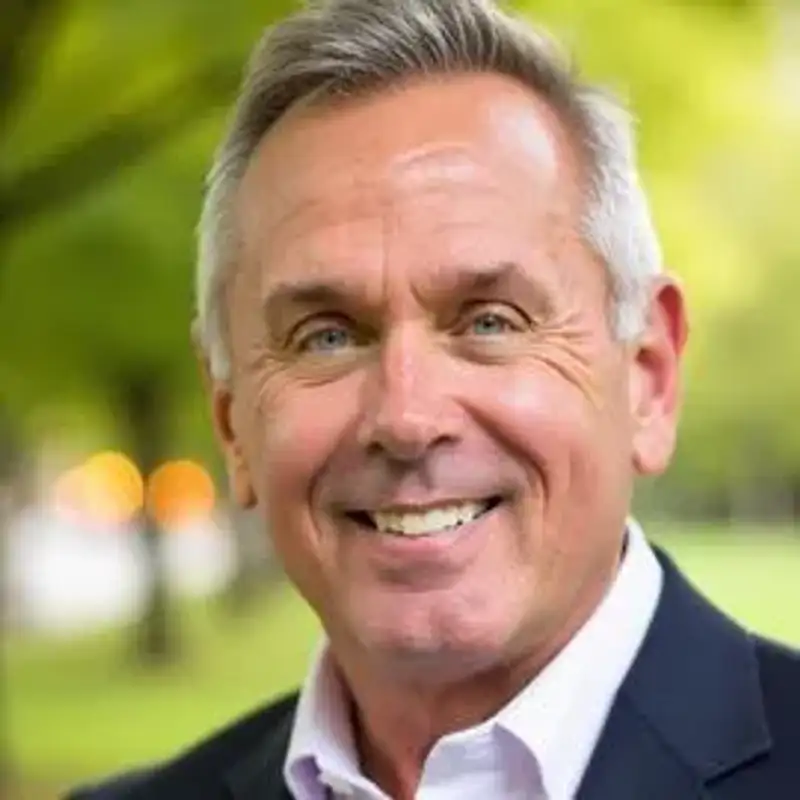
who's been doing this for over four decades. He's here to help parents, teachers, schools, and actually all of us to help unlock children's confidence and teach them the very soft skills that we talk about on the show. And before I go any further, please welcome him to the show. Hi, John. Hi there. Thank you. Welcome. I appreciate you me on and getting to share what I have to share today.
01:27
And I appreciate you being here. I'm excited for our conversation because I think it's very powerful to raise the next generation of leaders and those with all the emotional intelligence and soft skills that we focus on. How did you get started on this? You know, it's a very interesting story. And I never want to say that in my childhood wasn't great because in my four decades, I've gotten to experience stories of people that had it.
01:57
really worse in life. But my childhood, I think, brought me to where I'm at in the sense that I lost my father in a car accident when I was four. My mother remarried when I was nine, 10 years old, but it wasn't a great relationship. We do have that now, but we did not have that when I was a child. And I think it's because in my own mind, he fell short of what I thought a dad would be. You know, I never had that positive role model. So I found myself as a child quiet.
02:24
You know, I was held back in first grade, not because of intellect or bad grades. It was because my father had died. And when he did for the next year, I didn't speak. wouldn't talk to nobody. wasn't very pensive, very self-reflective and just withdrawn. So I was held back because I didn't communicate and open up in school. I kind of kept to myself. I think that really carried on throughout probably most of my life, definitely till probably eight, 17, 18 years of age.
02:54
And there's probably, to be in all honesty, probably a little bit of that is still in me when there becomes pain or disconnect. I can see myself, I pull back a little bit. catch myself and always ask myself, is this John or is this the nine-year-old John? I allow that to then like, correct your behavior, be more open. So I think with my work, once I got into, I was asked to start teaching for my instructor when I was 19 years old, for my martial art instructor. So was teaching in a hallway.
03:21
That blew up to be an amazing business that put me on the cover of MA Success, which is the Forbes Magazine of our industry. So I was on that in 2011. So I've had a very positive career in a very successful, I should say, as a competitor in this, but I made it. Somebody asked me once, why do you teach? And I really had to think on that. And then I realized, you know, the answer was I really deep down, I want to be the person I needed when I was nine.
03:50
Wow. Please say that again. Yeah. wanted to be the person I needed when I was nine. That's what I wanted to be for somebody else. So I realized at that point, and yes, there are some adults that need our guidance. You know, I've had people in adults that have struggled with substance abuse, domestic violence, sexual assault, and just not a good life. But for a lot of it, there was a spot in my heart.
04:17
that I had the opportunity to use my childhood to help other people coming up in that childhood and to find their potential. I never had a positive comment made to me by a male role model until I was 19 years old. And I'm like, what could that have done if I would have been fed that information earlier? And if somebody would have shown me the path, would my teen years have been better? Peer pressure, would I have been able to speak for myself in peer pressure because I knew my self value?
04:45
and not the value of what I needed to belong and fit into the group. So that's kind of where my work kind of took me to. Thank you for sharing your story. I find it so powerful that you know how a lot of the time when we've had some form of trauma, we typically what they call a trauma response, we would then either just go deeper down that path. What I find
05:11
very powerful with your story and how you took that is that you said, I didn't have this, but I'm going to give it to someone else who doesn't have it either. Yeah. Cause usually we tend to say, Oh, I didn't have it. So everybody leave me alone. I didn't have somebody. I'm not going to be somebody else for somebody. You know what I mean? Yes. That trauma responses. I say, we think you decided to be the opposite and say, let me give you what I wish I
05:40
had and didn't. Yeah, yeah. I'm a faith based person. I think I realized at some point in my life with the money that I was making, with the publicity I was getting with my school, I was doing things that a kid from the trailer park shouldn't have been doing, or at least in my definition. And I don't mean that as a negative for anybody that's listening and living in a trailer park. I meant I didn't have the resources. I didn't believe in myself. Nobody else believed in me. The people around me were small.
06:10
minded so they kept that suppressed. You know, I started teaching at 19 as I had mentioned and then by 21 I owned the building and was teaching 179 tournaments and had a little bit of notoriety for whatever that value that is. But I started thinking, I don't think I was ever naturally talented. I had to work for everything. And people would say, how'd you get there? It was a divine intervention because I really didn't know how I was getting. I mean, I had no clue on how to. I took it as a responsibility. Like, I've given you this gift.
06:39
Now, what are you going to do with it? Like I was interviewed for on the radio and that's where that question came. Why do you teach? It literally was maybe a month later where I came up with it. I want to be the person I needed when I was nine. And now when you think about your journey and you being as successful as you've become, would you say that as they say, no man is an island, that there were people along your journey, along the
07:09
who helped you to get to where you are? Oh, 100%. 100%. Who also became the person you wish you had? Yes. I think I've always had a thing of humility because I realized my success was beyond my own comprehension and my own doing. But there were people, absolutely along the way. I was just asked the other day, somebody's traveling. Nobody really travels more than 15, 20 minutes.
07:37
because you can have everything within 15, 20 minutes of your home. There was a gentleman who had served in the military special forces and he was in the area, but he 45, 50 minutes away from me. And he came down and he goes, I'd like to do a private lesson with you. Anyway, he complimented my teaching at the end and he used somebody that I hold in high reverence. And he goes, you teach just like him. And I said, listen, I pointed at the pictures of my instructors that are on the wall. I go, those four gentlemen.
08:05
are the ones that laid the bricks on this road. I'm just your tour guide in telling you why this building exists right here and why this is here. It's not me, but thank you for the compliment. And I do, I think if we all look back, you know, I always tell my students, my goal is to use my 44 years experience teaching, 49 years experience of competing and being involved as a student.
08:31
is when you become a blue belt, you're a better blue belt than I was. When you become a purple belt, you're a better purple belt than I was. When you become black belt, and you can, because there was nothing special about me. So when you see me wear this belt, it means you can too. But remember mine, I got a head start because I was able to start on someone's shoulders. I'm just your shoulders. So jump off me and take it to the next level and you owe it to the next person. Which I hope we can also pass it along.
09:01
Now let's talk about what you teach children, these skills to unlock their confidence. How did you design or create this program? I started teaching, like I said, in 1982 for my instructor in a hallway at a community college, literally in a hallway. You know, in 1982, karate was kind of nerdish. You know, now it's mainstream with UFC and everything else. So was like, oh, that's cool. Joe Rogan does it. Back then it was just the non-athletic nerds did it, right?
09:31
I kind of started in that model of teaching. I did this part-time for 14 years before I went full-time. By the time I hit 25, graduated college, put myself through evening, nighttime college. I was a labor negotiator. So I handled everything from Springfield, Illinois to Chicago and across from coast to coast. And I would listen to Tony Robbins tapes. Yeah.
09:56
You used to have those infomercials all day on TV. Yes, 100%. Right. So you're talking probably late 80s to early 90s. Yes. And I still have like this big cassette in my bookshelf in my office, the original that I've listened to. And when we were moving, my wife went to throw it away and I go, don't you touch it. It's like a album to me. You know, but
10:22
He had so much influence and I started to realize that by listening to him alone changed my energy and my thoughts on how I looked at things. So in 2001, I wrote this book and I shelved it for four over 14 years. And the reason was I thought to myself, who are you? You're a knockoff Tony Robbins. You're a wannabe. You're just trying to repeat what you learned from him.
10:52
No one's going to buy my book. What am I trying to do? To write the book was the main goal for me because I had a reading deficiency when I was a freshman. I had a sixth grade reading level and I got put in a special class. There was only three of us in it. And you know, my male pride in the beginning did not want me to go in and actually I would hide in the bathroom, wait till everybody was in the classroom, then run into the special.
11:16
Also, nobody sees that you went in there. Nobody saw me coming in or out. And I've always asked to go to the bathroom right before the bell rang. And then she finally pulled me aside. Her name is Mrs. Buffington. She pulled me aside and she said, hey, why do you have to do this? And she knew. I said, you know, I just don't want people see me coming and going. She said, you're not stupid. She goes, you're bright. You just have a problem right here. And if you promise to do everything I tell you to do and give me your best.
11:45
Come in late and leave early. She goes, never ever hide from who you are. That was like the first teacher that ever talked with me and that I didn't feel was talking at me. I gave her everything. And by my junior year, I was an honor roll student. By senior year, I was high honor. Sophomore year, I still struggled a little bit because I still had a little bit of the reading deficiency and then the little bit of the resentment of my life. I was literally at a point where I was jealous.
12:13
of kids who had a great relationship with their father. So anyway, when I wrote the book, I kept thinking, well, I just wanted to write the book because I wanted to prove to myself that I could write a book. The competitor in me came out, right? Well, and then COVID hit and I started thinking to myself, you should finish that book. Winners never quit and quitters never win. I completely rewrote it because I didn't think of the chapter on confidence the same way. Self-value was a different view.
12:37
So was almost a blessing that I shelved it for 16 years. Because my perspective completely changed. And then I thought to myself, I don't need to do this for adults. What if, and I would always say to people, in my 30s, I started listening to Tony Robbins when I'm driving and go back if there was something and I would make notes if I heard something that really hit them. So I think when I started and then I thought, well, no one's done this for kids. Let's do it for kids because
13:05
I know my life changed at 30. What would it have done if somebody would have, if I would have been listening to Tony Robbins at 12, would my teen years been better? Would I have been able to not make some of the choices I made and make better choices? Would I have been able to stand up for myself? Would I have understood that I don't have to be included to be valued? Would I have understood that there's potential inside of me that I'm not tapping because I'm waiting on somebody to validate me and I don't need someone's validation. I can validate myself. So
13:32
there was the book. That was the purpose of the book. It kind of like when I revisited, completely rewrote the book. I don't think there's one paragraph in there that's the same as it was when I was 16. And then I'm thinking about going back and looking at the one I wrote 16 years ago, maybe book number two is in there somewhere. don't know. I never ever gave up on it. I just didn't see where it would fit. So I really think when I started looking at my life's work, this made the difference to me.
13:59
I could use my childhood loneliness. My mother was great. My grandparents who I lived with were amazing. It wasn't that I had a bad childhood. I just had a childhood that I didn't express myself. I didn't try hard at things. I gave up early. I was always seeking something that wasn't there. And I thought, okay, what can I do to help kids that might feel that way now? So that's kind of where I shifted my life's work. I want to do that.
14:28
Right. And how do you help a parent if a parent comes to you and says, John, I have a problem with my teen, we're struggling to communicate. How do you help them feel hurt? Because I think a lot of teenagers say my parents don't understand me. How do you help parents become the Mrs. Buffington to their children?
14:52
and to help them develop their emotional intelligence and their healthy self-esteem. Yeah. I can say in the last week, probably I've had this conversation similar with other parents that I'm coaching, is, you know, listen and then ask more questions. When a child's small, everything your child does is with you. We control where they go to school. We control where they go.
15:19
We control what sports they're in. We control what activities they're in. We control their friendships. Matter of fact, we're the ones that set up the who's coming to the birthday party and we set up the play dates, right? And then as they begin into junior high and high school, they're talking about a friend that we've never met before. We don't know their parents. We don't know what their influence is. We don't know if that's a negative influence or if that's a positive influence. So I always say you want to create a relationship with your child.
15:48
that you are their source that they come to for advice and direction. And we're helping them become the person they need to, helping them learn to make decisions and judgments their own without us. And this is not an easy task. I have a soon to be 24, 22 and a 16 year old. And my 16 year old, the other day, she has a friend that sometimes I don't think does the right things.
16:17
I caught myself starting to criticize her and I stopped myself. And I said, I think she's an amazing person. Let me ask you, if she does what you just told me she did, do you think that's going to help her in the future or what's the benefit of her acting that way? And I think it's so easy for us to like blow up, like you did what? You skipped school, you hung out with this person, you were around people that were drinking, you were doing this.
16:46
Because then soon, if we always react in the protective shield, I don't even think it's reacting bad. We are nurturers. We are protectors. But if I react that way and I lose their confidence and they always are met with aggression, with criticism, why would they come to me in the future? So if I listen and ask questions and then let's explore and go deeper into the questions, does that who you are? Would that make you feel proud about yourself?
17:15
You know, I always tell parents, make sure we don't judge them, but we're helping to find their judgment for the moments that we're not with them. Yes, because when they are outside your care and they're in the world, when they make choices, there's peer pressure from their friends. They want to be part of the group and belong to something outside of the house. So how do you
17:44
basically put wings on them to go out there and fly and not feel the need to make poor choices just so that they can be part of that group, part of the popular kids, the cold table at the cafeteria. all those things, right? Yes. And it does, it starts that simple, is like...
18:09
I think I always had friends, so I don't want to say this was ever an awkward, but you know, I was bullied when I was probably up to the age I was nine because from third grade to fifth grade, I was in four different grade schools because my mother dropped out of high school to have me, but she was a widow at 21. What's a 21 year old mom of two do with no education for a job?
18:33
So we would always end up, my mother would go out, try to do her best to become mom and raise us on her own. And then would fall short financially and we didn't move back in with our grandparents. And by the way, that was not a bad thing. When I was in my later teens, I was one of the few people, we lived 30, 40 minutes from my grandparents. And on weekends, I would still, as a teenager, I would still go spend the night at my grandparents. Because to me that was home.
19:03
and I would share and talk and tell them what I'm doing in my life. And they would be positive references to me, right? Think about this, a child walks in new. No child should ever wonder who do I sit with at lunch? That's the first I have to fit in somewhere. If I'm me and I'm valued, I'll be invited to the group. And that's a totally different mind shift. And as I talk often with kids, when you're with that group to be included,
19:32
Does that group make you feel better about yourself? Does it make you want to do the, you know, if you're an A student, do you want to become an A plus student? If you're out for sports, do you want to try harder? Or do they kind of tease you about what you do? Do they kind of make fun of you? Do they talk negatively about you? Are they talking about other people in the group when you're not, when they're not around? Because there's a good chance they're doing that same thing.
20:02
I have a saying that confidence comes through competence, not through praise. So we can be told we're smart. We can be told we're beautiful. We can be told that we could be anything that we want to be in our lives. But if I don't believe in that, I'll never be any of those things, right? And the competence part, John, is very powerful because have you realized you were talking about how you kept trying and trying hard and trying hard on your sport in the special class until you got it right?
20:31
builds confidence because you have proven to yourself without anybody telling you that you can do this, that if you put the work in, you can do it. Yes, it's great to listen to Tony Robbins and everything, but when you do the actual work, something in you clicks and you go, hey, if I can work on this from scratch and get it right, I can do the next thing from scratch and get it right. That's 100 %
20:59
And that's what I say the confidence through confidence because you can tell me all these things, but until I prove it to myself, I really don't have true confidence. I have praise confidence, which is a totally different environment. But when I'm struggling with a test, when I'm struggling with the first girl that breaks my heart, when I'm struggling with a friend that I feel betrayed me, when I'm struggling not making the team that I thought I was naturally good at and it didn't happen, what happened?
21:26
All of those things can be defining moments, but the more that they believe in themselves are the moments that they'll make the right decision. So I always encourage parents, you want to give them enough room to fail, fall possibly, fall short, fail, but you're there to say, help them get back up, go back at it and try a second time, a third time, a 10th time, whatever it is required for them to do it.
21:56
Because until they prove that to themselves, what are we really proving? I don't think confidence is there by words alone. I'll share a story. In 1996, I'd have been 33, 34. And I had taught some from 1982 to 1996 part-time. And I had an amazing career. Then I got hired with a union group. And it was two and a half times the pay that I was making. So in 1996, I'm making six figures.
22:26
But I didn't really like what I was doing. I think I'd reached my peak. And I remember telling someone, I want to put my notice in and they go, what are you going to do? And I go, you know, the only thing that makes me feel alive, makes me feel like I have a purpose is when I'm teaching martial arts. I'm going to start my martial arts school full time. By the way, for anybody listening, I encourage that. I truly do. I went from making $125,000 a year in 1996. The next year I made five, I took $5,000 home.
22:56
my first year. Now you gotta remember, it wasn't brand new for me. I taught part-time for 14 years. I didn't understand business. I understood how to teach, but teaching for your only livelihood was a totally different thing. I went to my mother and this process and I said, I'm gonna be leaving. I'm gonna do this full time. And she was like, don't, don't do it. You'll go broke. And technically she was not off. 100%. And that is the nurture and the protector that she had been for me.
23:25
I always say she had to step up and do double time once my father died. And I looked at her, I said, mom, all my life, you told me I could be anything I wanted to be. In the moment I come to you at 33, 34 years of age, and I tell you, this is what I want to do, you tell me, no, you'll fail. And I go, you're trying to protect me. And I get it. Because at that point I realized my stepdad, who I called dad, he took me in at nine, 10 years old. We got a great relationship.
23:55
But we were not financially stable. But there was a thing in my head that was like, never want my children to ever have to struggle financially. So I realized, and I told her, said, Mom, I know I'm making more money than you ever imagined, but I'm not happy. And I said, I'll make it. I'll do it again. Trust me. I got this. But I need you right now to look at me and act like I'm nine and tell me
24:25
I'm good enough, I'm handsome, I'm charismatic. Tell me all the things you've told me all my life and tell me to go do this right now. Because I need you to tell me that because if not, it's gonna be back in my head that you don't believe in me. know, again, it was a tough year. And I will say, I think it was maybe the 10th month when you're struggling to pay bills. Now, thank God I was a single guy at this time in my life. My expenses were so low, they were under $1,000 month and I'm making 125,000 a year. So I had money in the bank.
24:55
Thank God that carried me through that next year because there was times I second guessed myself. And if anybody's listening, you go into business. I'm glad I followed my heart and not my brain because I was offered three jobs during that period. I'm struggling making it financially. Anytime I'm struggling, you got to go to my knees and I fold my hands and I do the prayer and I stuck it out. And I'm so glad because I'm like, no, that's not where I'm intended to go.
25:24
That's the easy path. They're trying to pull me back to the easy path. You didn't win 179 matches or 179 tournaments because you looked for the easy tournaments. You went to the big tournaments. This is just a tournament, buddy. You got this. Wow. And that's the message that when you ask me, I give you all that background. That's what I want to do because, you know, I just watched my son deal with a struggle in his career.
25:51
He struggled and he wanted to give up. And I said, just put your two week note in. was, it was not a very positive thing for him at the time. And I'm confident and I never asked him, but I taught him to think like that. And I think that got him through that rough point. Anxiety and panic over his career. And I'm like, nobody can ever take that away from you. And you did become the person that you needed when you were nine. Like you said, yes. Yes. Yeah.
26:21
If any parents are listening, one last word of wisdom, just as you've shared today, that they can build their children's confidence. Any one last thing that you were hoping to tell them before we close? We need to parent a different way. Yes, there's a time that we need to be harsh with them. There's a time we have to be true with them. You know, as a martial art instructor, my title is a hanchi, which means a teacher of teachers.
26:47
And my students have a saying, they'd be very careful if you ever want to have a heart to heart with Hanchi, he'll ask you, do you want me to tell you what you need or do you want me to tell you what makes you feel good? That will dictate how I handle this conversation. And I had a lot of those moments with myself as a kid and with myself as a teen adult. And I have those with my kids. So I always say, it's time to parent. What can I do to guide my child? If I'm dealing with that nine year old that I want to help, I want to create
27:17
independence thought where they know how to ask themselves these reflective questions and not criticize them because I want them to come back to me when that reflective question, hey dad, I tried this and I failed. And this was the conversation. My son said, I tried this and I failed. I'm not good at this. And I go, listen to me. You're good at this because you have a hundred percent served customer survey satisfaction and you're number two in the commissions.
27:47
that your company got and you're only in your 90 days. You're good at this. Don't confuse your pressure, your anxiety and the pressure that you're feeling to take away from who you are. You are good at this. So say it to me again, but remove that from your vocabulary. Now, what is the problem? That's a conversation with a 23 year old. So, but at that conversation happened when he was young, he understood the pattern of.
28:14
I'm guilty of this. Like I said, I criticized my 16 year old friend and I caught myself and I said, you know what? I love you and I'm protecting you right now. And that was wrong for me to say, ask me the question again. If you ask them questions, then they feel listened to as well. Yes. Are they seen? Are they heard? Are they valued? I think that's the key, you know, and again, I don't want to ever say that I'm the perfect parent. I'm not.
28:40
I don't think anybody is. doesn't come with a mental. A child comes in the room, but they don't have a book on how to operate. No, exactly. So. But thank you so much for sharing that wisdom, John. think that a lot of parents will certainly listen and benefit from it. Can you just tell us where we can find your book, Embrace Your Awesome, because that book also helps parents be able to teach their kids some of the concepts you've shared today. Yes, yes.
29:08
So my website is johngeyston.com. So my name, J-O-H-N-G-E-Y-S-T-O-N.com. Everything's on there, my podcast, my books, how to collaborate with me, how to work with your group. Also, I have a new online program on school that is going to be released in about 60 days. But right now we have a free resource on there. So I'll provide a QR code for you. They can go onto that, but it also will be on the website too. So either way they can see it here.
29:38
or they can get that on the website. I'm pretty transparent, pretty open. I will answer. I don't have a team of people. So if you are out there and you write me, you can find me on social media, Instagram, Facebook, my website. I will answer. So we'd love to follow up JohnGeyston.com for the free resources and we will put all those details on the show notes. Thank you so much, John, for being with us today.
30:05
Thank you. appreciate it. And thank you for allowing me to share the story. And hopefully if one thing I said can make a difference, hope I made it. Absolutely did. Thanks for being here. Don't forget to subscribe, leave a rating and a review on Apple and Spotify and stay tuned for more episodes to come.