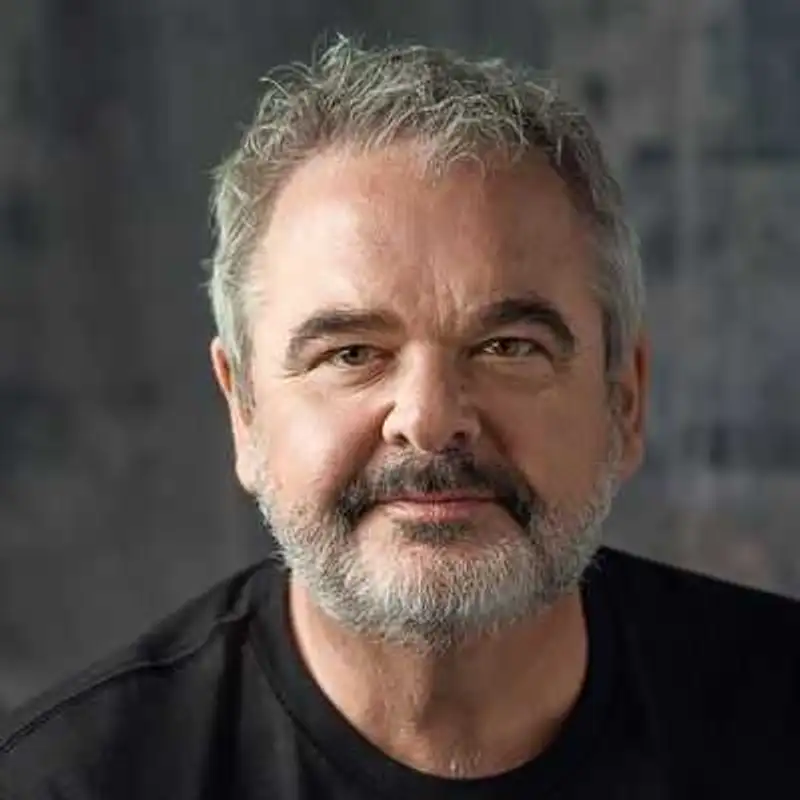
Why Leaders Need To Communicate Effectively w/ David Firth
00:00
Actually that is a fabulous point, Roberta, that is at the heart of my whole approach to communication. I believe our communication should be a service to others. If we have this thing called servant leadership, then communication is what drives servant leadership. Welcome back to the Speaking and Communicating podcast. I'm your host, Roberta Ndlela. If you are looking to improve your communication skills, both professionally and personally, this is the podcast you should be tuning into.
00:27
Communication and soft skills are crucial for your career growth and leadership development. By the end of this episode, please log on to Apple and Spotify and leave us a reading and a review. Now let's get communicating with our guest today. Joining us from Colorado, David Firth is an author, consultant and speaker who has spent over 30 years in the communication field. He is here to help us see
00:57
how powerful communication creates change and shapes creation. And before I go any further, please welcome him to the show. Hi, David. Hey, Roberta. It's good to be here. Thank you for that introduction. My absolute pleasure. Welcome. Why is it that of all the things that you are passionate about, communication is what resonates most with you? You know, there's a couple of ways of answering that question. One is that
01:27
communication and influence. I loved how you, when you introduced me, by the way, emphasize 30 years, but actually, you know, my relationship with communication and speaking goes back way longer than that. You I was from a generation in the UK where apparently
01:46
you were allowed to be good at one subject. And if you were good at one thing, they would say, get on with that. And if you get to be mediocre and everything else, which I was, you know, then you're okay. If I were to share with you my report cards from literally infant school, elementary school, four years old, all the way through my academic career, would be David is good at language and literature. Wow. I have a vivid memory of my headmistress principal.
02:10
Miss Bradshaw, remember her name, making me stand up in front of a class at elementary school. So was about five years old at the time and read out an essay I'd written, which I remember was about rain falling on leaves. She made me read it out in front of the whole class. You wrote an essay at five years old? Oh yeah, yeah, yeah, yeah. They teach you fast back in those days in England. Yeah, yeah, Anyway, my point is that I learned two things in that moment. One, that at that time I was terrified in front of a group.
02:40
I was embarrassed to stand up and read this thing in front of a group. And then the second thing, I didn't get this at the time, but when I look back on it and when everybody at the end of my essay, she made everybody applaud. I remember there's something nice in that applause. That's quite a nice experience actually to please a group of people in some way, whatever that might mean. My history of communication goes back an awful long way. So that's when the seed was planted. Thank you, Mr. I think so.
03:08
And how did you then get to a stage where you help leaders, especially with their communication and what the impact of that is on them? Yeah. So that is all down to my old friend and mentor, Peter Soul, which is a beautiful name in itself. It happens to spelled like the fish for me. He was my soul friend. S O U L friend, you know, because my
03:38
Good friend Alan Lee at the time and I left university and set up a theatre company. We ran an international theatre company for six or seven years, toured around the world. It was an exciting experience and Peter Soul, who was a big fan of our theatre company, happened to be a senior director in an insurance company in the UK at the time in London. And it was he who said, you guys know something about communication, you should teach it to my IT department.
04:05
because they can't communicate anything to anybody. And we were like, we don't know anything about communication. We know about writing and directing and performing and rehearsing and those things. He said, yes, you know something, work out what it is and teach it to my tea department. And that was the beginning of my business career. So we're in the early 1990s here. And at the time Alan and I were just doing this presentation skills training. We didn't even know there were such things as presentations. We were that naive. We had to learn.
04:32
that there were presentations and that people didn't like doing presentations. And so we had a presentation training company. And then Alan went off on his career into banking and I stayed in the consulting field and decided that this communication was bigger and broader than just presentation skills. Cause this was now the mid 1990s where we were talking really for the first time about corporate culture, engagement. Back then we called it motivation, the same thing, engagement of people into the culture towards performance.
05:02
And so yeah, it's been, that's been the path ever since then. Right. Two things from that. One, I know you laughed, but IT people tend to be accused of not being big on the communication side, but more on the, I just want to sit quietly and do my work. type of. Yeah. Yes. And that's why a lot of the time, even on the show, we have experts who emphasize on how much
05:30
that is still very much needed in their profession despite everybody thinking, oh no, but you're just gonna program and do all your software coding quietly. You don't need to learn those communication skills. Yes. Oh yeah, absolutely. And again, it was a magical time in retrospect for us to be setting up that trade and to have an IT department as our first client because they themselves were going on a journey. You know, a couple of years prior, they would have been.
06:00
sitting, writing code, not speaking to the users. But IT at that time was beginning to get into customer service for users, going out there, not fixing the computer or the laptop. If we had laptops back then, I can't remember, but you know, not fixing remotely, but actually going and talking with the users. They had to get out of that internally created shell of, prefer not to do this too.
06:26
I need to communicate with these people to find out exactly what the issue is and then, you know, take it to some level of satisfaction. Yes. It has also moved to a point where in order to even create the code, find out exactly what the client needs are. That requires a whole lot of communication to be very clear so that when you sit down and you write code, you know exactly that, oh, this is what David needs and this is what the end results should be.
06:55
Exactly right. And actually that is a fabulous point, Roberta, that is at the heart of my whole approach to communication. I believe our communication should be a service to others. If we have this thing called servant leadership, then communication is what drives servant leadership. For me, there's a little too much communication training, which is still about how do I get to sound strong, look confident, all these are necessary, but the world is a very noisy place. And if we're all just trying to be out there.
07:25
being clear and being confident in getting our point across, we may actually just be creating a noisy world as opposed to actually helping each other. And so, you my approach to communication is very much based in service to others. What does my audience need? You know, whether that's the IT example or whether it's a, I work a lot with engineers and technical people like that, you know, how can they exactly find out exactly what the needs of the client or the stakeholders are? Not just at a technical level.
07:54
You know, they need this machine to start doing this rather than that, but at an emotional level, because when they are talking about investing millions of dollars into a new machine, there's an emotional risk that there's a risk, psychological and emotional risk. So how can I, as the engineer show up as somebody who is aware of that risk and help the stakeholder through that? are bringing a very good point, but at the same time, you say that communication is not so much a skill.
08:23
we learn but a mindset to inhabit. What do you mean by that? I think the skill part of it is necessary for our development. It gets us going as adults. So there I was as a child, five years old, whatever, in front of the assembly, reading out the thing, terrified. If I'd have not learned the skills of overcoming those fears, communicating clearly, looking at the audience, smiling as I do it to make sure that I'm okay, you're okay, all of those great things, then that would have inhibited me as a...
08:53
as an adult, you know, who knows what sort of adult I might have turned out to be, you know, maybe a very shy or introverted, not that there's anything wrong with that, but who knows, you know, so I think the skill is important to get us to a place where we can begin to assert ourselves on the world. You know, I want to go to this university, here's my resume or CV, you know, I would like to apply for this job, here's why I think I am capable and willing to do this job, so it asserts ourselves on the world.
09:23
But then I think as we get older, realize that for many of us, there's a bit of a shift we go through from that asserting and persuading and influencing and all of that great stuff into trying to make a difference. That is much more of an internal mindset thing as it is more skills. You know, I don't need more skills to show up as somebody who's passionate about making a difference in this job, in this engagement, in this team. You know, I need a mindset which includes things like humility, for example.
09:53
because I'm no longer at the front of the room saying, here's my point of view, follow me. It's like more of an invitational approach, which is, hey, I've got this idea, what do you think? Would you work on me with it? Yeah. I think the way you describe it, you're basically saying, it's not something that I say, okay, this is a skill just like if I learned something at university and then it's a job I do when I get home, I'm somebody else or I'm back to my normal self as I say.
10:22
but it's something you actually embrace, as you said, it's a service to others. I've never heard of it being put like that before. Oh, thank you. I mean, the other thing is that I think one of the other things that I focus on is outputs more than inputs. Now, back then it was inputs. When I came out of the theater world into the world of business, my clients did need to overcome their nerves. They did need to be able to...
10:48
breathe more slowly so that their voice didn't dry up and all those necessary things in order to feel actually I'm okay in front of a group big or small and I can assert myself and so that was necessary but if we just concentrate on how can I be more confident how can I be more clear how can I be more influential nothing's happened yet apart from I feel better and that's important but somebody who I can't remember the name once said necessary but insufficient necessary but insufficient so I've
11:18
Got my skills here. What am going to do with them? So one of the questions I ask my clients when they come to me and say, David, I want to improve my communication skills, is I say, so that what happens? Oh, so that I feel more confident. So that what happens with that? Yeah, I'm confident in front of the room. Who cares? Ah, so that I can shape the next set of processes in this company, or I can shift the group towards this being of service to customers rather than that.
11:47
Now we're getting to outputs rather than just the inputs. So I think that's the other thing that is necessary in communication. What are we trying to do with the communication? I'm speaking a lot here, when I think about my engineer clients, deep down, they don't want to be better communicators and storytellers. They want to be better engineers. So are they mutually exclusive to them?
12:10
I will generalize to make the point. They would prefer not to have to do the communication and storytelling. They would prefer some sort of miracle thing where they have an idea about the machine and the stakeholder goes, yeah, here's the hundred million dollar check. Don't you worry about it, you know? But so they know. But my point is they want to be better engineers so that they can do better engineering projects so that they can improve the productivity of the organization. That's the stuff that inspires them.
12:40
And then if I can turn up and say your communication storytelling will help those outputs, then they're going to listen more than they would to me. David, first the communication storytelling guy. Yeah, right. At first, if that's how you are presented, they're not very keen to meet this David Fuerth guy. Back in the day, Roberta, you know, I used to speak at conferences a lot before the pandemic and I give my
13:06
you know, my little bio thing, and it would mention somewhere in there that I was in the theater. Too many people would introduce me as David Firth, the actor is here to teach us. Not about the 10, 20, 30 years by then I'd had of being a consultant. They thought the theater thing was interesting and different. And people would be more open to welcoming you rather than seeing. He's a communications expert. Whereas the audience is going like, why do we need this actor talking to us? So anyway.
13:36
It's funny that you may put it that way because my first boss, which is basically one of the reasons I started this show was my first boss back in 95. My first job, I'm just a junior and the director of the transportation engineering division. You think he wouldn't rent to somebody like me. maybe I was more the safe choice. He wouldn't rent to one of the top engineers. don't know. So he's the director of our division.
14:02
And my country just had gone through changes. So a lot of our clients were the government departments, the government ministers of transportation and things like construction and whatnot. We used to just travel. I don't know if you're familiar. So our capital city is Pretoria. That's where our head office was where we worked. But then the, lot of the ministers in Johannesburg, that highway is always backed up 24 seven literally in South Africa and
14:30
We used to go to these meetings and these workshops and these meetings and these workshops. One day he was renting to me on the highway on our way back to the office so we can then get to the office and go home. He goes, just not here, I can't in my...
14:46
talk talk talk talk talk talk talk talk and he's renting his MSU and he's renting in the car. And yet when these very very sort of time wasting but our clients the government departments when they call him he's got all the patients in the world he puts up with whatever they need despite those feelings and it gets to a point where we didn't need to even bid for some government contracts.
15:16
They just say, may I speak to you on I have another project for you because of the last project and how he was able to communicate and to them despite his internal feelings. I think that for me was a big eye opener because he didn't give into his emotions and it got us a lot of more contract. That's a great story. That's a great story. There's so many levels to that story because you know, the all I do is talk, talk, talk reminds me of the anecdote about the
15:44
CEO of this big company who proudly brought his young son is to shadow him during his day, you know, go from meeting to meeting. And at the end of the day, as they're back or being driven back, because he was that successful CEO, they're driven, being driven back in the life now. The CEO says to his son, so what do you think of your dad's work? And he said, you call that work all you were doing was talking. Talk, talk, talk. And yet, you know, this goes back to your why am I so passionate about this thing?
16:13
First answer was, it's been in me for a long time apparently. Second answer was, my clients seem to really want and need it and I like to be of service and so I resonated with that. The third aspect of it is why I'm so passionate about this topic Roberta is, I don't think we're ever outside of communication. We sometimes think of communication as a separate skill that we have to use. For example, if we're doing a presentation or a speech or a one-to-one. But is there anything going on in our day?
16:42
where we are outside of You know, it's funny when you ask that question because the title of my show has the word communication in it, right? Yes. There are so many facets to communication. I've had people in my inbox wanting to talk about talk about animal whispering. That's communication. Then I would go, yeah. But if I were to go through literally every facet of life has a communication angle to it.
17:11
If I were to accept everybody, people won't even know what the show ends up being about anymore, but everything boils down to communication. It really does. And I go further than communication as this thing that comes out of our mouths. I include this thing that many people call thinking because for many people, me included, my thinking occurs to me as a voice. And so I don't call it thinking, I call it communicating with myself. And just as there is good and bad.
17:40
healthy and toxic communication out here. So too there is good and bad, healthy and toxic communication in here too. And one of the books I'm working on this year is called Ratty and Angelo, which is gonna be about the two voices that we possibly could have access to. And then the question is then David, which voice do you listen to? Yes, well, we tend to, I mean, the book, which I'm telling is a sort of children's story. The book suggests that we tend to listen to Ratty because Ratty funnily enough,
18:09
has apparently the best communication skills. Ratti is very clear. Ratti is very strong. Ratti doesn't stumble and study. says, no, David, you'll never be able to do that. Or you shouldn't apply for that job. Or that's not good enough. Or other people are better than you or whatever. The negative Ratti voice comes across as incredibly powerful. And so we tend to listen to that voice because we've been trained to believe that somebody who speaks clearly and confidently must be telling us the truth.
18:36
Or you said earlier, wearing a suit and being more impeccable in the presentation. We have nothing against suits by the way, disclaimer. We do not have anything against suits, Right. So your leadership program is called the Jewel in the Crown. Why is that? I think it's, you know, pointing to that idea of there is always communication. You know, it's the heart of everything.
19:05
It is the shiny object to pay attention to because I'm going back to the communication is everything point here. know, some of my clients definitely use me in these areas, whether issues with, for example, team dynamics or getting a new story out there among the people, but they don't think of using me when there's apparently a technical issue like the production facility or quality issues or whatever.
19:32
And I would wager that if I spent more than 15 minutes with them, I'd find out that the quality issue actually has very human causes. a miscommunication of some There was a miscommunication or somebody spotted something and then didn't say the issue spiraled. My other big mentor is a guy called Peter Block, who wrote a fabulous book called Flawless Consulting. You know, and he says, you know, look at any issue that you're facing in your life or in your company and look at it.
20:01
First of all, answer the question, what's going wrong? Technical wise, what's the problem? Write down your answers to that. And then say, look at the exactly the same issue from a people and team dynamic point of view, write down all the issues there. He suggests that the answers to that question, the people question are going to be longer and richer than the technical problems, you know? And that's really why it should be thought of, think communication generally might be thought of as a jewel in the crown. You said every other aspect.
20:30
We find communication not that I don't know if we didn't agree that I will tell the viewers that you've been married for 38 years, but yes, technically married 36 years, but we did nurture the two years. But we are driving on to 38. Don't you worry about it? We're driving. For sure. sure. Hence, does that mean even in your marriage, communication is the reason you've been together for this long?
20:59
Yes, my wife is a superb communicator. That's all I will say. She needs to have workshops and coaching programs. Absolutely it is. mean, the, know, over the years I've had some excellent sort of executive coaches myself, you know, and yet my wife has been the consistent coach of David all the way through the relationship. And I'd like to think of her to me as hers as well, but she maintains, you know,
21:27
she's always interested in what I'm up to. You if I come down from my office and say, Oh, that was an interesting show. She wants to sit and listen and talk about it together, you know, so which is, which I think great, know, and also in being a superb communicator, that means you don't have moments where you wonder what happened now. She doesn't make you guess and you know,
21:49
Well, you think your sponsors psychic powers. Why don't you just say what's going on instead of making them guess or try to figure out? know, seriously. I always remember one day early in our marriage, I forgot her birthday. Can you imagine early on in the marriage forgetting somebody's birthday? took me about two thirds of the day to work out something was seriously wrong and she wasn't saying what was wrong. In her silence, she communicated that I might've...
22:18
forgot and then sounds ridiculous to say but hey we're all human yeah I think since then she's been a lot more let's get to the point you know it is my birthday buddy you better come back this moment and I think that is the thing we were talking about you know if we don't speak up then the quality issue may escalate may spiral and that's true in human relationships as well in marriages in friendships we for some reason we tend to maybe believe the ratty voice that says it's not your job to
22:47
say something here or you don't really know what's happening in your friend's life so don't say anything, you know. And sometimes just that breaking through the silence and offering help and saying, is there anything wrong? Can I do anything to help? Just maybe the question could be the difference that makes a difference, you know. Because it's that service mindset again, you were talking about earlier. Yeah. I have found that if I have a horror story, that Ratty Voice is a horror story.
23:13
when I'm not sure what's happening and I'm sitting here thinking the voice that's building up this entire horror scenario, horrific scenario. Whereas if I ask, I find that if I just say, you know what, let me just ask David if everything is okay. I find that one, there's gonna be clarity. The horror story in my head is not even where this was going. I just made it up. And just for asking, I have
23:43
solved a hundred potential problems that could have happened. Exactly right. Exactly right. Oh, and by the way, the Ratti Voice may not have been accurate at identifying what the real problem might have been that you would then, that you then spiraled off onto. Yeah, exactly right. Yeah. One of my coaching clients, I've been working with her, you know, cause she would often talk about her mind being like a tumble dryer, you know, going round and round and round. And so we're trying to just calm it down and slow it down, but also intervene.
24:12
Quickly, just ask. Just ask. You'd be amazed how many assumptions we make and half of them are not even really what's going on. I don't know if I have time to tell you a quick story on that. Please do. Just one last one. We love stories. Some years back, I worked with a group of people in a big organization and this particular group of people wanted me to help them with difficult conversations, conversations they would prefer not to have. But they realized on a professional level that
24:39
if they didn't have the conversations, things would get worse on their own. So they were sort of up for the training, but I created the training such that they'd identified in the pre-work an issue that was real for them. And so we started the day and I took them through the model, I took them through the theory, I took them through the evidence and all that, made them reassured. And I said, and of course when we come back after lunch, you'll be getting into pairs and having these conversations. They're like.
25:04
Oh, really? Okay, you know, and then just before lunch, I said, well, let's go and enjoy our lunch now. And then when we come back, you'll able to put all this into practice by having it in. Okay. And so they had a miserable lunch from any of them, you know, they came back in the work room afterwards and oh, David's good. And I did. And I said, off you go, you know, here's your pears off you go and have these conversations. think I gave them 45 minutes to have the conversation and then reflect on it together.
25:29
and they came back in the room and they were all, da da da da da. Oh, after the difficult conversion they had here? Because they the experience you were talking about. Oh, is that all it was? Oh, you mean if I'd have asked them what they were really thinking earlier, they could have found out. So they were completely in the sense of relief and pleasure that it was a lot better than they had anticipated.
25:56
because the inside voice built a horror movie. Absolutely right. And it was very clear and confident, so they were programmed to listen to it. yeah, it did. And so I hope if anybody's listening who is in that room, I hope they've maintained that sense of, know, we've got to get out of this thing and out here and speak and communicate with each other to find out, is there a real problem here? And if so, how can I help? How can I help? If I can't help, great, but at least I've offered.
26:25
spoken through the silence as it were. And you know what's really going on, not the story you're making up. Exactly right. Yes, please tell us about your book, Unconditional Communication. Yeah, and I'm working on the follow up to that book right now, Roberta, but the Unconditional Communication book is something I knew I was going to write and then the pandemic came along, you so that's when I was finished really focusing on the book.
26:53
if we could take ourselves back to the early days of the pandemic, we were not quite sure how this was going to work out. So I thought, maybe this is my last book. So I really, it really became a very personal book. I talk a lot about the impact of my father on it and the of friends and family and so on. And it's a book very much about the ideas and the mindset behind the tools and models that I teach in my consulting work.
27:19
The follow-up is very much about the tools and models themselves, but I wanted to go from a sort of inside out. So Unconditional Communication is the name of the book. And the last word in the subtitle is a very important one to me when it comes to communication, which is together. Oh yeah. Doing things together. It's not having communication so that people really listen to me. No, so that we can build something together, a better team, a better process, a better marriage, a better friendship and doing it together.
27:49
So that's the focus of unconditional communication. Absolutely. Any last words of wisdom? Anything you were hoping to share today I haven't asked you yet. That's a great question, Fillian. You know, the thing that most comes to mind is as well as focusing on the things I've talked about here, service mentality, communication, so that what happens. I think if I could as well, if we could all get to a sense where communication is something we enjoy.
28:18
that feels good most of the time, I think that would be a better world. And maybe the way we start is by dissolving this a little bit or turning down the volume on the noisy ratty voice inside. But yeah, let's all try not just to be more effective at our communication, which is very important, but also to enjoy it. And why are we enjoying it? Because we think it might make a difference for somebody else. Yes, the service mentality indeed.
28:43
David Firth, the author, consultant and speaker from Colorado. Thank you so much for sharing your wisdom and your experiences with us when it comes to communication. been a great pleasure, Roberta. Thank you for having me. Mine as well. Before you go, would you like our listeners and viewers to reach you and where can they find you online? Yes. Well, my website is davidfirth.com. But if you're to search for me on Google, make sure you please do David Firth consultant.
29:11
I'll just go to David Firth.com because there is a very famous animator from the early days of the internet also called David Firth. He has done some amazingly creepy and scary cartoons. Which I think might have turned off a few people who think that I'm that. So David Firth consultant as opposed to David Firth animator, David Firth.com. We'll get you there. David Firth.com is much better and no relation to Colin Firth. No relation to that David Firth or Colin Firth, no.
29:40
Not that we know. Not that the family speaks about, you know. Absolutely. Thank you, David, for such a wonderful conversation. I had a great time. Thank you, Roberta. All the best. My pleasure. Don't forget to subscribe, liberating and a review on Apple and Spotify and stay tuned for more episodes to come.