How To Have Executive Presence: Voice Coaching w/ Sandra Bargman
00:00
Help me to tell this story in a bigger way and better way, in a truer way, in a more interesting way. Help me to learn how to land this in a way that people see themselves in me. People want to work with me or for me, are inspired by me, by my journey, my vulnerable, authentic journey. Welcome back to the Speaking and Communicating podcast. I'm your host, Roberta Ndlela. If you are looking to improve your communication skills, both professionally and personally.
00:29
This is the podcast you should be tuning into. Communication and soft skills are crucial for your career growth and leadership development. By the end of this episode, please log on to Apple and Spotify and the Vistar rating in a review. Now let's get communicating with our guest today. Joining us from upstate New York, Sandra Bargman is a voice and presence coach.
00:56
who has so many accolades from Hollywood, I cannot even begin to count. She's an actor, singer, director, who is actually an ordained minister. And you're gonna hear more about that. And she's here to help us move through pivotal transitions and evolve our identities. And before I go any further, please welcome her to the show. Hi, Sandra. Hello, Roberta. Thank you for having me.
01:25
and hello to your listeners. Thank you for being here. And I'm sure the listeners are very, very much looking forward to your story. You have such an illustrious career of 35 years doing this. Tell us more about that. Well, I, yeah, I mean, I popped out of the womb singing and dancing and acting and creating little shows in my backyard. And I was also the kid that had the antenna.
01:53
that was reading the energy off in the corner of the room, reading the energy. So I was really a performer, really out of, and a spiritual seeker right out of the gate. And I was fortunate enough to be raised by parents that while they weren't professional themselves, they definitely supported it. So they got me into activities that uplifted that. I did my first play when I was six years old. I did my first professional show.
02:23
when I was 18 years old. I mean, I played the violin, I sang in choirs, I did all those things that really helped this career blossom. In addition to that, I was also a spiritual seeker and reading on all things spiritual. I went to conservatory. I'm originally from Pittsburgh and I went to Carnegie Mellon University, which is a great theater and music school. And then I forged a career in New York City. I also have a place in Harlem.
02:53
a small apartment in Harlem to support my life in New York. And it's just been a fantastic journey for me. I've done regional theater, I've done Broadway nationals, I've done off-Broadway, I've done lots of commercials, I've done so many voiceovers that I could buy my first house with the money from doing them. I've done some film work, I've done on-camera commercial work. It's just been a fun journey, but at the same time,
03:21
I was also very interested in my spiritual life and pursuing that in a more overt way. And by the time I hit my mid forties, I was enrolled in an interfaith seminary, two year program and ordination at St. John the Divine in Manhattan. And that really, I don't want to say disrupted my acting career, but it was so important to me that I pulled back slightly.
03:51
from my career, didn't go after it with the same gusto. I now had two tracks that really, professional tracks. I had come out of the proverbial closet, if you will, spiritual closet, and really was holding space and sharing my spiritual concepts in a bigger way, in a leadership way, in a teaching way. And so I had to learn how to really be able to do both of them in a way to stay engaged and involved.
04:20
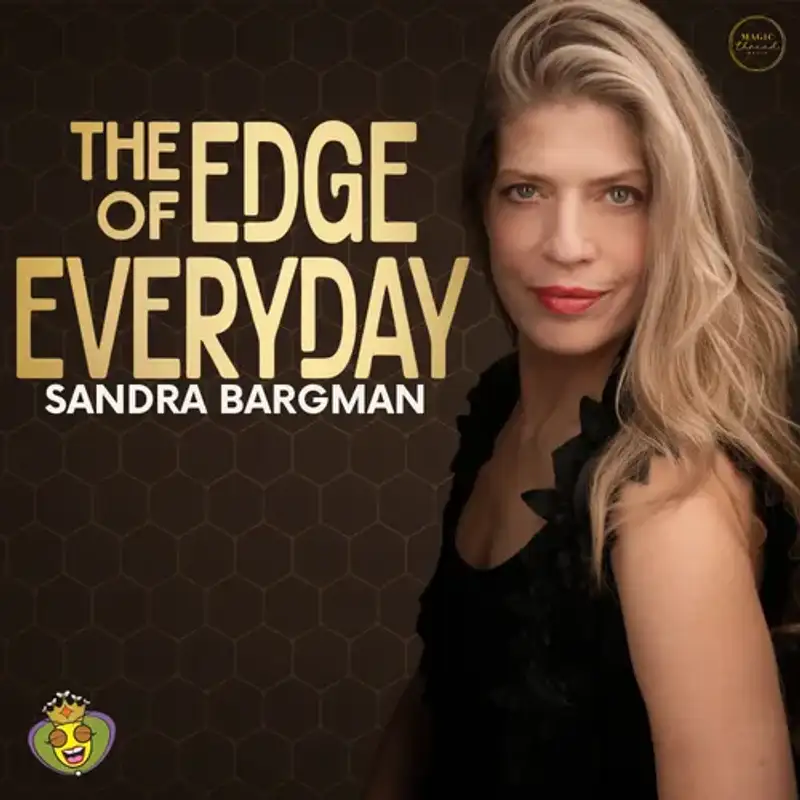
in a professional way in both of those tracks. And that took some time to negotiate, but I found my stride. And then I created my own company, Sacred Stages LLC, that combined my performing background with my ministerial desires and my teachings. I created a cabaret show in New York City called A Caber Ritual. I structured it like a ritual, but it was a one-person show. That's the poster.
04:48
for those of you who are looking at the video. So, The Edge of Every Day, and I did that in New York City to wonderful reviews. And just as I was updating the show, COVID hit. All of my performing work, other shows I was booked to do went poof. All of the weddings I was booked to do went poof. Any work on The Edge of Every Day went poof.
05:13
And my husband seamlessly moved from his office into my office where I'm tuning in right now. And I just wanted to stab him. I was like, oh my God, it's so easy for you. And I'm like writhing on the ground. know, people, it cracked me up. People were, oh, I loved the time off. I wrote my book during COVID. And I was not my experience. I was not happy about it.
05:36
But I got it together and I started a podcast based on the edge of everyday concepts. And the rest, as they say, is history. That's been a marvelous journey, creating a podcast. And it's changed my life immeasurably. So long acting career that continues. I still act, I still do shows. I have enough people in my life now that I've worked with who will call me in for shows. I don't have to pound the pavements as it were, like you did back in the day. Yeah, like a crazy person.
06:03
which is not to say I don't still audition, fortunately I have other things in my life that are filling it in addition to shows that I will do. The creative life, the creative journey, the spiritual journey, and the leadership journey of helping leaders step forward with greater, more impactful communication, a better voice, a richer presence, gutsier storytelling, all of that speaks to...
06:30
my journey, my personal mission of knowing myself more deeply. That great Greek maxim, know thyself. It's at the heart of all three of those journeys. So they all flow beautifully in and out together. It's all about uplifting my own voice and uplifting other voices. I absolutely love that. And thank you so much for sharing your powerful journey. First of all, kudos to your parents for supporting you.
06:58
Because I think back then a lot of the time, if you are a kid who was a little bit out of the norm, your parents used to just think, what's going on here? No, you want to be a lawyer. You want to be this. want to be that. Yes. Because I'm sure the first thing they said when you showed any interest in entertainment was, Sandra, you won't be able to pay your bills. Right. Well, my parents did not. Wow. You know, my father played the violin. I played the violin. They were both creative. They enjoyed.
07:27
We went to the theater with a enjoyed music. I suspect that my mother probably, I lived out her dream. I suspect that she lived a little bit vicariously through me. She was my greatest fan, my greatest champion. While also not being one of those stereotypical crazy stage mothers. She was nowhere near that. She was just supportive and cheered me on and uplifted me.
07:56
And that was that, there was no like going rehearsed or going to Those Tiara shows on. No, no, that was not her. I had enough self-discipline. Just loved it. And I loved, you know, all of the groups that I was in and I was very self-motivated as a little kid and kind of an introvert. Now, the second thing, when you talked about your spiritual journey and we've always wondered, cause at least let me just say, as the general public, whatever we.
08:24
here doesn't mean that all of it is true, whatever we hear about the entertainment industry, just the mere thought of combining that with your spiritual journey. Cause sometimes we always think, Oh, if somebody gets virtual, does that mean they live the industry altogether? Cause it doesn't gel with that world.
08:45
That's interesting concept. mean, for me personally, I can't really separate my creative life from my spiritual life. And if you ask any artist who really considers themselves an artist, they will say it's a spiritual journey. Their creativity connects them to something larger than themselves. I mean, know, the ancient roots of performing, ancient roots of
09:06
spirituality and religion were one in the same. Back in the days of Greek theater, they believed that the actors were channeling the gods and goddesses and bringing back nuggets of wisdom for the audiences. They're very one in the same. And for me, it is that. And I really discovered that really concretely when I was in seminary. I really reconnected to that deep understanding. I think, you know, sometimes we can think about people in the industry as being
09:35
particularly motivated by their ego and very separate from a spiritual practice. But, you know, those people are few and far between. There's a percentage of people who are, you know, the working actors who aren't completely egotistical. It's far outnumber the few that would feel that way. And in terms of spirituality, I mean, you know, what are we talking about? Are we talking about religion or are we talking about overall spirituality? For me personally, it's not a leap at
10:03
All the dots can connect very easily my spiritual life with my performing life. And if you go and you hear somebody speak at a church, if you are a part of an organized religion, or if you go and hear someone speak about spiritual concepts, to some extent, it's a bit of a performance. The engagement, being able to hold an, and inspire an audience to tell a story that pulls people in. It's no different.
10:32
then the communion with the audience that you feel when you're on stage is the exact same communion you feel when you're behind a pulpit or behind a microphone talking to a group of people that are there to hear about voice and presence and the emotional intelligence it takes and the spiritual intelligence it takes to really sink into deep presence and to really sink into gutsier storytelling. This is all deeply alive work that is at the heart of your spiritual journey.
11:02
It's at the heart of your creative journey as well. Voice and presence. When you started your career, did you receive a lot of coaching in that regard or it was just a natural talent for you since you help people with that now? Oh, that's a great question. I think I've always had, in terms of just precision with my voice, I think in an ear, because I'm a musician, I think I've always had a natural ability for good diction. I can do
11:32
dialects really easily. I can move. I've always been very active physically, so I've had a connection to my breath through body work. You know, that really intensified in conservatory. You know, we really had voice and speech in the whole nine yards and had my Pittsburgh dialect, Pittsburghese inflections taken away so I could sound more Midwestern, more dialect free.
11:58
It came totally naturally and I think it also was learned. mean, through experience, through being on stage. I mean, I've been on stage since I was six years old and you begin to know what works. And I've been behind a microphone doing voiceovers for 30 years. You begin to understand how to tell a story. You learn the principles, you learn how to curate the thing, you learn how to breathe, you learn how to...
12:23
move in for the intense movement. You learn how to lighten up when you need to. All of those things you learn, these are the great actor skills that I bring to my work with my clients. mean, actors have to know all of these things and they play around with them. They play around with their voice. You know, they just go, you know, they learn what it can do and what it can't do.
12:48
and where they need to focus their work. Is it a little too nasal? Is it not deep enough? Is it not rich enough? They work on their breathing. They get to know their body, how it responds. They really work on it as an instrument to utilize. So these are all the skills that I can bring with helping people to work on some of the issues that they feel might be in the way of them being a little more successful with their impactful communication and better voice and presence.
13:17
you know, in terms of having presence. think also actors are really great at understanding that because they've worked so hard on knowing themselves. They've played so many roles. They've role played. They've experienced life through the lens of different characters and different outlooks on life. They've learned who they are. And there comes a confidence with that, a real resting within their own story as a person.
13:47
They've learned enough about humanity that they can begin to have a sense of humor about who they are. They don't have to role play and pretend. They can rest. They can be relaxed in their own story. And in my particular experience, I think that people with the best presence are not the loudest. It's not louder, faster, bigger. The person who has the most presence in the room is the one that walks in.
14:16
with the complete confidence and in their own story. They've told their story, they're comfortable with it, they know their flaws, they know their strengths, they know their vulnerabilities, they've shared them. They're solid within who they are. So they're not going to have the rug pulled out from underneath them by someone, know, responding to them in a negative way. They're not gonna take it personally. They'll just be, that's not about me, that's about you.
14:45
Right, because they know who they are. You know, sometimes people get this idea that I've got to be big or loud or faster and that this big charisma is what my goal should be. And that's not at all, in my opinion. The goal should be, I want to be the most authentic me and the truest version of who I am in all of the communication that I do. I want the confidence to speak my truth, not the truth that should be heard.
15:15
the truth that I hold within me, that's presence. And when you coach leaders, do you find that it's challenging for them to get to that point? No, I don't think so. I think by the time they come to me, they know they've got to curate some stories. They know that they have to be vulnerable. I think they're kind of clear that they need to turn a corner. And I think anyone who's a good leader in today's world understands that leadership is not about authoritarian behavior.
15:45
You know, it's the soft skills are the leaders today. It's the empathy, it's the compassion, it's the great communication, it's the collaboration, it's the creative problem solving. And all of these are skills of the actor and the spiritual leader and spiritual intelligence, emotional intelligence. Those are all skills that you can find within in those frameworks. You know, so I think people are really onto it.
16:12
They know that they need to shift out of this role playing of I've got my act together and I'm gonna tell you what to do. People aren't turned on by that anymore. It's just not successful. So by the time they come to me, there's no argument about, it's like, help me, help me to tell this story in a bigger way and better way, in a truer way, in a more interesting way. Help me to learn how to land this in a way that people see themselves in me. People wanna work with me or for me.
16:40
are inspired by me, by my journey, my vulnerable, authentic journey. Not the, now that I'm a leader, I'm supposed to be a certain way. I'm supposed to present myself in a certain way and wear the suit. And because I think a lot of the time, like you were talking about the fact that people pick up energy. Yes. And no matter how much you think I'm presenting myself,
17:10
That executive presence is more an energy, authentic feeling and energy rather than, I'm wearing a suit and everybody around me is supposed to listen to what I have to say, because I'm the authority. Right. And you're going to get triggered. You're not going to have genuine relationships with people. You're going to get treated. If somebody doesn't respond in this ridiculous way that you feel that people are supposed to respond to you while you have
17:37
this mask of authority on, it's gonna start to crack. You're not gonna have a genuine relationship. You're not gonna inspire that person to really engage with you in an authentic way. That's what inspires trust in the people around you. You're courageous enough to share who you are. That's leadership. And you inspire people to do the same. Right. Because here's what happens. I think a lot of the time when you become a leader,
18:07
There's sort of this identity people feel like they need to inhabit, like they need to become this new person. Hence then they start putting on all these masks and thinking, this is what's gonna move the train forward. All these myths that we try to break down, yes, which then is the opposite of having executive presence. Well, and hopefully they'll learn because they will, you know,
18:35
trial by error is going to show up. Are you going to be inspiring the people around you, your team, or people that you need to work with or collaborate with? Probably not. And you're not going to get what you want. So at some point you're going to have to go, uh, maybe it's me. Maybe it's not them. Maybe it's me. Maybe I need to do some internal work and set down these, these masks. And by the way, that's got to feel really free. Yes.
19:04
No one asks this of you to put these masks on. yes. Yeah, you don't have to self betray yourself and walk on eggshells and for fear somebody might see a crack in your persona. You get to be you. Yes. And the confidence and the resting into the real leadership, that's when that happens. Then you become the leader. Right. When you do that, you're literally showing others the way to be.
19:32
So you said something that I would like an explanation on when you say finding yourself is the wrong goal. I mean, how many times have we had, you know, go to the mountains and find yourself. Go find yourself. Why do call that the wrong goal? I don't know. Listen, by all means, if that description turns you on, go do that. But finding yourself to me suggests
20:00
I've lost myself and you haven't lost yourself. have your still right here. What I consider that gets in the way that going out and finding always going out and trying to find oneself is for me personally missing the point. What has worked for me is what is it that I need to set down that is standing in my way of revealing who I am.
20:29
both to myself and to those around me, to those I work with, to those I want to inspire, to those I'm in relationship with, to those whom I love and adore. What can I set down? Not what do I need to go and find? What do I need to set down that gets in the way of me having some self-compassion, being honest about the things, the places in my life and in my journey where I need some work?
20:58
Yeah, maybe I need to grow this particular muscle or maybe I do walk around with a chip on my shoulder. But I can only do that by going within and being willing to set that chip down. Why does inner work feel so heavy? It's like, I think the reason we usually say, let me go to the mountains, the outside sounds a little bit more bearable because a lot of us, we do find it a bit uncomfortable.
21:26
to look within. That's why some people can't be silent. Something must play and some noise must play in the house. They can't just be in a quiet space. Then they need to work to find a quiet space within the house. And by all means, go to the top of the mountain if that's the quiet space you want. But the journey is within. The real work is the willingness to be able to look into the mirror of relationships. Because you can be anything you want on the top of the mountain all by yourself. But when dealing with people... But when you come back down in the world...
21:56
and you live life in your human body, that all goes out the window, you haven't done any internal work. It's working in relationship. It's looking in that mirror that that other person shows up to you. There's the work. That's why I say my life being married for 33 years, that's a spiritual practice. You choose that person every single day and you get that mirror put up to you when you just want to run.
22:23
all the noise and not deal with it and not look at something that's bothering them that you're like, no, that's your fault without having the self-compassion and the courage to look at that honestly and truthfully. That's the work. And yes, no one said it's easy. then when you do that is that when your identity begins to evolve.
22:50
because you talk about identity evolution. I ask in my podcast, the Edge of Everyday podcast, streaming on all your favorite platforms. The first question I ask every single one of my guests is what identity do you lead with? The spectrum of answers is really interesting, very revelatory. And I've had some people back more than once on the show. And more often than not,
23:17
their answers have shifted. That's what know, ask me on any day. I understand that we as human beings have set up systems and structures where we do wear certain masks. I understand that as a minister, people view me a certain way. I understand that when I walk into an acting room, I'm seen a certain way. My goal though, is to show up in all of the places I show up. Exactly.
23:47
the same as I would show up with my husband at home, that I would show up at the grocery store. I would bring the same energy to all of those situations. I want to lead with the identity that understands that I am all of those things and none of those things. I don't have to hide behind any way of being that speaks to that. I mean, there's a balance that I can hit.
24:17
that where I understand that if I'm doing a wedding, let's in front of 200 people, I've written this beautiful ceremony for this beautiful couple telling their story and inviting their community into the sacred transformation of this ceremony. I understand the gravitas of that moment and I'm going to embody it. But am I going to pretend that I have the ear of God more than anyone else does? And of course not.
24:46
Not that ego mask. No. Yeah. No, of course not. Am I going to crack jokes with all the people that I didn't talk with afterwards? Absolutely. A swear word might fly out of my mouth. Am I going to worry about that? Of course not. Because I know who I am and I know the wisdom that I walk with and I don't have to prove anything to anyone. Absolutely. Very powerful,
25:12
If anybody's listening, one last word of wisdom for them to find that authentic grounding and base within themselves, what would you advise them to do today? It all starts with breath. When you take a deep breath, when you want to make any change in how you show up in the world, when you get to that moment, that moment where, oh, there's that thing. How do I want to respond to this? That difficult
25:41
moment where I want to respond one way, but I don't feel safe enough to do that or courageous enough to do that. Stop and spend a moment where you really notice what's happening in your body. Are you nervous? Do you feel the energy moving all through you? Do you have knots in your stomach? Is your mind going a little crazy? You have butterflies. Take a deep breath.
26:08
and give yourself that grace. Take a deep breath. Try to regulate yourself a bit. Flood your brain with some oxygen. Make a courageous choice in that moment to not react, to respond truthfully. That can include saying nothing, saying, let me think about that. Can you clarify that? I'm not sure I'm on board with that.
26:38
That moment of breath in that difficult moment to witness what's going on with you, to give yourself that oxygen that really will calm you and give you a bit of a moment to choose to be a little more courageous. Because at the end of the day, it's just another muscle to grow. The more you do that, the easier it will get. The more you witness,
27:08
you'll understand those moments. It's a practice. It's a spiritual practice. Just another muscle to grow words of wisdom from Sandra Bargman, the voice and presence coach who helped us with identity evolution and being authentic. There's so much that you taught us today. Thank you so much for being here.
27:31
I loved our conversation. Oh, thank you so much. I loved it too. You are wonderful. Yes, I appreciate that. Thank you, Sandra. Before you go, please give us details of the Edge of Everyday podcast and also where our listeners and viewers can find you online. So the Edge of Everyday podcast is streams on all your favorite podcast platforms and it lives at MagicThread Media.
27:59
My own personal website is sandrabargman.com and you can contact me directly through there. If you want to set up a 20 minute call to find out how you can work with me for voice presence and storytelling and upleveling of all of those skills, go to magicthreadmedia.com. Go to services and there's a booking link right there for 20 minute complimentary phone call.
28:29
You can find me on YouTube, Sandra Bargman on the Edge of Everyday. You can find me across all of the social media, LinkedIn, Instagram, Blue Sky, Facebook, all of them. X. I think I got them all. We'll find you everywhere. sandrabarjman.com, Magic Thread Media, the Edge of Everyday podcast. Thank you so much, Sandra, for being here today. Thank you so much. It's been a complete honor and pleasure.
28:58
My thanks to your listeners. Thank you, Sandra. Don't forget to subscribe, liberating and a review on Apple and Spotify and stay tuned for more episodes to come.