How to Escape Your Comfort Zone: Leadership & Imposter Syndrome w/ Stan Lewis
That is what I really appreciate about you because, Roberta, you get more of what you praise than what you criticize. Of course. Watching and listening, people will tell you things. People will give you good ideas that will move the division, move the department, move the company forward. But you have to listen.
00:20
Welcome back to the Speaking and Communicating podcast. I'm your host, Roberta Ndlela. If you are looking to improve your communication skills, both professionally and personally, this is the podcast you should be tuning into. Communication and soft skills are crucial for your career growth and leadership development. And by the end of this episode, please log on to Apple and Spotify and leave us a rating and a review.
00:46
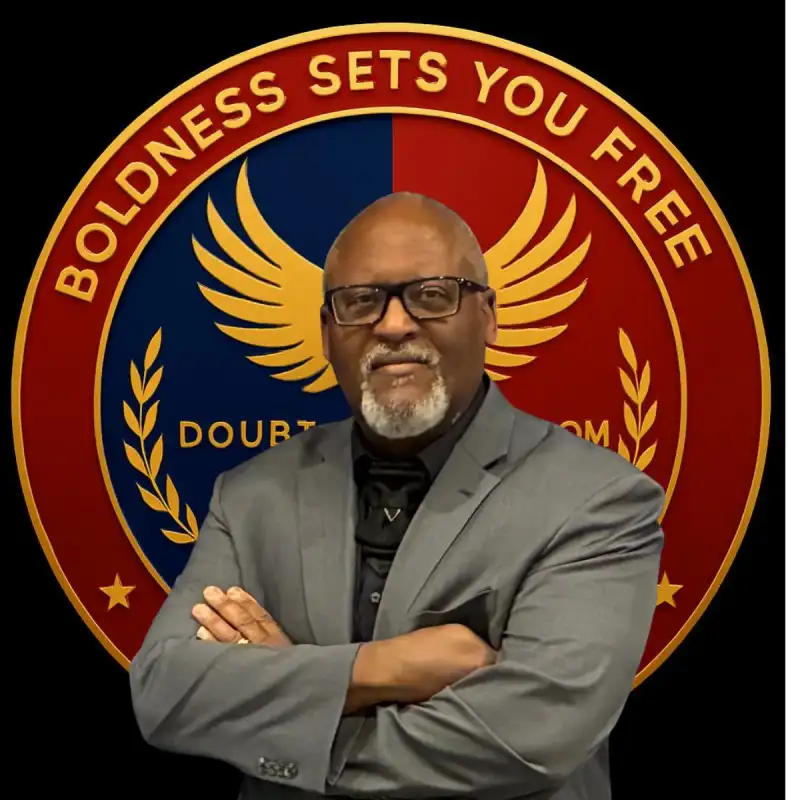
Now let's get communicating with our guest today joining us from Texas. Stan Lewis is a leadership and communications expert who is here to help us break conditioning, unlock freedom and our potential and to lead fully. And before I go any further, please help me welcome him to the show and he agrees. Hi, Stan.
01:11
Hi Roberta, thank you very much for giving me the privilege to come on your show. I really do appreciate it. My absolute pleasure. Welcome. I'm so glad that when you said you help us unlock freedom and live fully, said that's right. You sound very passionate about your mission. A little bit more than compassionate. I am convicted about it. I feel that people doubt themselves and they lock themselves away in what they call their comfort zone.
01:39
thinking that it's comfortable, thinking that it's safe. I'm a firm believer that your comfort zone actually does you more harm than good. Does you more harm than good. Is it the harm of potentially what you could have been, but are not exploring, but also the pain of it? think, yes, sometimes in talking about this and saying to people, know, your potential, you can do so much.
02:07
Do we actually take the time to understand the pain at which it takes to step out of your comfort zone and give them tools and strategies to deal with that? Well, there's pain in staying in your comfort zone because it goes with what you just said, what I could have done, what I might have done. And you're watching other people succeed and move forward, knowing that they're no better than you are. They're no smarter than you are.
02:37
The difference being is that they stepped out of their comfort zone and the individual that's feeling that pain is staying within their comfort zone. That's why I'm saying it does you more harm than good to sit back in your comfort zone because your comfort zone, Roberta, if I'm gonna be completely honest, it's not necessarily all that comfortable.
02:59
So why do they call it a comfort zone? You wonder, you know, I've talked to some other podcast hosts and I explained it like this. You've heard the story of the baby elephant that's tethered to the stake. Okay. With a flimsy rope or chain. I've heard it both ways. That baby elephant can't break that chain or break that rope. So as it grows, it's mentally conditioned to believe that it can't break it. And so even as an adult,
03:26
The owner of the outfit doesn't need to change the size of the chain, doesn't need to change the strength of the rope because that outfit is not going to pull against it because it believes that it's limited by that rope or by that chain. And that's how we are. What I'm trying to do and what I'm convicted about is to get people to realize that they can break or snap that line and step out of their comfort zone.
03:55
breaking that mental captivity so that they can unlock their freedom, so that they can lead fully and become the best versions of themselves. Which will make them very proud. Have you noticed how good it feels when you finally do something that you thought, oh, there's no way I can do that? Yes. It feels so good. Oh, wow, I'm actually capable of more than I thought.
04:21
If you give something a try that you thought, oh no, I don't, I don't step into that territory. It is like, okay, if I could do that, what else can I do? It begins to open a door and you know, here in America, I know football around the world, you know, we call soccer here before American football. People want to go to complete length of the field and score the big touchdown. But would you systematically yard by yard move?
04:50
down the field until you get to the goal line and you cross over. Step by step by step, being intentionally moving forward until you achieve your goal. You don't have to get it all at once. Right. You can systematically move toward it. When you were talking about the elephant, the funny part about having that mental block of, oh, this is how far this can go.
05:18
When you think of the Olympics, that's why they always recording the times, you know, the fastest and the breaking of records. I've always wondered the person who breaks the previous record when they are training, are they training to break the record or to just be number one in the record just happens to be broken? Oh, that is a good thought. Well, me, I would say that the person is training to be the very best when they get out there.
05:47
they're competing against everybody else. They're wanting to get out there and be number one. And in doing so, they break a record. Because we always think, oh, if the fastest man in the world did the 100 meter dash in 9.92 seconds, that means I must target to run 9.92 seconds. I don't think they think like that when they're training. No. Yeah. They want to make themselves be the very
06:16
best version of themselves and go out there and put on their best effort. And their best effort that day was a world record. Now let's talk about what you said earlier, which was the story, the conditioning. When you're a grown up, how do you even ask yourself, is this fact or is this conditioning? If I think like this,
06:43
Is this factual? Is this what it's supposed to be? Is this what we call reality? Or this is conditioning, this story can change or it can be rewritten. Well, it can be rewritten. This, I have a framework which I call the vantage point shift. If I had a group of people, let's say I take a beach ball and you know, beach ball of multiple colors and say I put it out in the center and I had everybody hold it up with one hand.
07:09
And I asked, when you look straight ahead, what do you see? Well, one person may say, see green and yellow. The other person might say, I see blue and red. It'd be different all the way around. But if I had to lower that ball a little bit to where they're looking down on it, what happened to where they lowered it, they changed their vantage point. And now they can see things differently. Right. They say, okay, yeah, there's more than the yellow and blue or the green and red bears.
07:39
multiple colors here. So what people have to do, you have a limited vantage point, your limiting beliefs, doubts, negative self-talk, the imposter syndrome. You have to take a step back and recognize, okay, is this real or what's going on here? What are my doubts? What is my negative self-talk? Call themselves things out and recognize them for what they are. Now that you've recognized it, it's kind of just like you lowered
08:09
the beach ball, you have a new perspective, you know you have these doubts, you know you have these limiting beliefs, then you put action steps in place to move away from those, toward where it is that you truly wish to be. That's the way that you begin to change your mental captivity. Would you say that sometimes in changing your vantage point,
08:36
Are there trusted sources in your circle you could ask for a different perspective? Because I think sometimes depending on who you ask, you may find. Because sometimes they might have, they might be like a mirror to you on things you not have explored. love that. I love that. So you brought up two things there, going to a trusted source. I remember when my daughter was younger and
09:04
She was having trouble with mathematics. Her mother and I said, well, I'll tell you what, we're going to get you some help. And she says, well, you know, I'm doubting myself. I'm not having faith in myself. I said, lean on my belief in you and lean on your mother's belief in you. We're going to get you some help here. She got help and she graduated high school in AP courses. I wish she went to college. She was tutoring other college students in math.
09:34
But at that point, sometimes you need to go to a good friend or a good mentor and lean in on them. I was applied to all sorts of federal investigative positions and I wasn't getting any. I found a mentor, a guy with the church with, he was a federal investigator and I just leaded to him and his advice. And eventually I did become a federal investigator. So
10:04
I say all this, Roberta, to say that you are absolutely correct. You do need to find that dependable person, mentor, and they are out there that you can lead into that will help you along the way to achieving your goal. Absolutely, yes. I think a lot of people sometimes forget that nobody is expected to do things all by themselves.
10:30
especially if you want to achieve great things, if you want to unlock your potential. You're not expected to search for the answers all by yourself. There's mentors, there's those you can lean on until you start to believe in yourself. I think sometimes people forget that. You do it even in our relationships. I'm blessed to be married to the love of my life for 31 years now. We were working on year 32. But there are times when
11:00
She leads on me and there are times where I lead on her as we help each other through this thing called life, marriage, raising kids, career. Also, you know, if you have a good spouse, somebody that you believe in, talk to them, lift each other up because that's what you're supposed to do. Each one leading the other one up.
11:28
And I said, people say, well, Stan, does that mean that your wife leads at times? Absolutely, she does. oh Coming from a law enforcement background, I kind of put it to you this way. It's like two officers going in doing a building search. One will go ahead, and the other one will watch their back. Then they'll leapfrog the other one to go and search the other one's watching their back. Well, that's me and my wife. Sometimes she's leading in her giftings.
11:54
I'm covering her back and sometimes I'm leading at my giftings and she's covering my back. You'll find the same thing in the workplace. And if you don't have a boss there that can do that, you can find a mentor elsewhere and lead it to them, much like what you said, Roberta. So that was a great point of yours. Thank you. Because also speaking of leadership in the workplace, I think that sometimes people wait for the leader with the position and the title.
12:23
to display any type of leadership quality. You can be a leader even if you don't have the title and the corner office and the L-shaped desk. What you're talking about, Roberta, is 360 degree leadership. As my mentor, John Maxwell says, you can lead down to those that answer to you or that you supervise. You can lead across to your peers, and you can definitely lead up
12:51
to your supervisor manager executive. And you should be, if I opinion, a 360 degree leader, servant leader. And you don't wait for the title. In fact, I think if you display leadership qualities before the title, you are more likely to be rewarded with the promotion and the title because you've already shown that you're capable of leading. Absolutely.
13:19
People will not follow you for the title. I was a military officer, Navy officer. People didn't follow me for the bars on my collar. I was a Mustang officer. Me, I was prior enlisted. I had an idea of what the, an understanding of enlisted personnel. And I remember how I would have liked to have been treated by an officer and tried to treat people accordingly. I always held people accountable. I wanted the best of people.
13:48
But I always let my men know throughout my career, anytime I was in supervisory position, that I am for you. And your people are not going to be for you until they know that you're for them. And when they know that you're for them, they'll do anything for you. I was telling this story here the other day when I was a police officer. got in a high-speed chase, got up to 120 miles an hour.
14:16
Finally got the person stopped. stopped in front of a house. was outside of my jurisdiction in another city that they eventually stopped at. And I said, why did you run all the way here? Why didn't want my car towed? I knew I had a warrant for my arrest and I knew I was going to jail. So I didn't want my car towed. Well, my lieutenant came and he asked me, said, Stan, why didn't guy run it? I told him, you he didn't want his car towed. He knew he was going to jail. My tenant looked at that car.
14:42
Boarded 18 inches from the curb facing the wrong direction. Toed. Put my officer's life at risk. And it was that last portion there. Put my officer's life at risk. What I took from that is that this man is concerned about me. I mattered to him. And I knew that he was for me.
15:06
And he can ask me to do things. He might be at the end of the shift when it was time to go home, get co-starved to go home, ask me to do something. I would do it not because of the bars that he wore on his collar. I would do it because he asked me to do it. I would do it because I knew that I mattered to him. And in reciprocity, I wanted to be for him. So if it was a little uncomfortable task or
15:35
staying a little after to get something done. I was doing it for him, knowing that he was for me. I love that. And the fact that you remember the story that shows you how much it meant to you. Now, the question is, any leader who is listening, how do they, especially those who struggle to connect with their team members, how can they start to implement those little things? Like, start to shift their perspective in how they see their team members and not
16:05
just see them as, you know, human performance, human test area. Everybody is different. And one of the things that you could do as a leader, well, there's many things, but I'm going to key all this one, active listening, because many times your subordinates will tell you something that's important to them. And if you're actively listening, you'll pick up on it. could be sub-spot days. Sub-people like recognition.
16:35
or words of affirmation, know, the love languages. If you listen, you'll pick up on it. And then as a leader, you look for an opportunity to intentionally act on what's important regarding your people. It could be acknowledging something that they did in front of coworkers. It could be coming to them going, hey, listen, you always do that.
17:03
excellently and here you go again, doing it excellent again. That is what I really appreciate about you because, Roberta, you get more of what you praise than what you criticize. Of course. And so if you're watching and listening, people will tell you things, people will give you good ideas that will move the division, move the department, move the company forward, but you have to listen and
17:31
If your people excel, you will be recognized. Go take a credit for your people's ideas because it'll close up. You want them ideals rolling and you want to call those people out positively and look for ways that you can intentionally speak it to their lives. Yes. Listen, when you are encouraged, you'll go the extra mile as they say. And we're not saying that
18:01
If you're in a leadership position, if there's constructive feedback that needs to be given, you shouldn't, of course. But if you have built that relationship with your team, with active listening, with actually when they do something right, you acknowledge it as well. think sometimes leaders have intended to not say much when things are all going well. As soon as something goes wrong, you're like, Oh, I didn't know he spoke so much.
18:31
And you don't have to put every ideal that your people come up with into effect. Sometimes some of the ideas say, hey, we're going to shelve this for right now and come back to it at another time. Not going to shelve it because it's a bad idea. It's a good idea, but I don't think that now is the time for it. And then, Roberta, when it comes time for that ideal, call them in and say, you know that ideal you had a while back? It's time to take that off the shelf.
19:02
How can we apply that idea to the current environment that we're in and then you're off? Make sure that everybody in the office knows that, wow, he or she really meant what they said when they put something on the shelf that they'll come back and later time they take it off. And we actually get credit for what we do. People speak positively to us about what it is that we do. It just makes for a better office environment when you're actively listening to your people.
19:30
And speaking of your people, so we've discussed how we are conditioned. We have imposter syndrome. If you're a leader, do you have time to address those issues with your people or you just focused on if they affect the productivity of the team, then you address those issues? I think that you can't afford not to address the issues because those are your people.
20:00
You know, if I'm understanding it correctly, when people are coming up with good ideas, when you're brainstorming again, you want to listen to them and intentionally act on the good ones. And uh the ones that it's not time for you, just go ahead. Like I said before, you put those on the shelf. But I think that you can't afford not to listen to your people because after all, they are your people. If you're not getting
20:30
out of your people what you feel you should get out to. know, sometimes Roberta, it's a matter of training. Because all too often we're expecting things out of our people that we've never trained them for. Have you found that some leaders when they step into the position, they also have some conditionings they need to break where they thought leadership was one thing and they found out it's something different? Right. And they begin to doubt themselves.
20:57
There's that negative self-talk and these things happen because we're and we're not perfect. And out of our imperfection, we fear making mistakes. But you know what? Your doubt at that point, your negative self-talk not only affects you, but it affects your people. It comes a point to where people step back and sort of do what I call a doubt detox. You got to face it head on. It detox that doubt and
21:26
to intentionally move away from it. Because when you do and you step into your leadership, you're not only going to affect yourself, but you're going to positively affect your people also. Doubt detox. Is there anything you can share with us regarding a doubt detox? I'm not sure if a lot of our listeners have heard of it before. In a lot of times when people hear detox, they think of people with addictions and things of that nature.
21:56
But sometimes doubt can become an addiction. It can become a mental addiction. And so I have something what I call a doubt detox worksheet. And it kind of follows what I talked about earlier with the vantage point shift is taking a step back and asking yourself, hey, is there anything holding me back so far as doubts, negative self-talk, imposter syndrome?
22:20
you know, these negative scripts that you've inherited from your upbringing, environment, past experience, or just being in a new role and kind of feeling a little unsure. And it asks you to at least name three negative self-talks that you got going on with yourself, the doubts, it could be imposter syndrome, list those down because it's hard to overcome that which you haven't acknowledged, okay? Until then, you're just talking.
22:50
But when you're intentional about putting these things down and then going through it, now you can reflect on it and expose that doubt for what it is. And when I talk about exposing, say, Hey, is this really true? I go back to when I was in college and I wanted to run for homecoming court and I didn't want to be king. I just wanted to be on the court. And people were telling me that I couldn't give me all sorts of reasons. It is stood back and go, is this reason true? No, this reason is not true.
23:19
And that reason they're giving me is not true. And that reason they're giving me is not true. I'm moving forward with this. Well, when you expose the doubt, ask yourself, is this really true? And you're going to find out that this is just a conditioned thought. It's not really who I am, nor is it who I want to be. And so you have to speak into that and then think on that a little bit and say, OK, being that it's not true, what action steps can I put in?
23:48
place to move me away from this doubt, this negative self-talk toward where I actually want to be. And so I know a lot of people like to have a visual. So I created a doubt detox worksheet so that people can sit down and intentionally engage themselves in an exercise. It's going to kind of detox some of that doubt to remove it. Because when you go through a detox, you're removing
24:17
negativity out of yourself. know, sometimes you see these like liver cleanse or these little detox things that you can take to remove impurities out of your body. That's what this doubt detox worksheet will help you do. Begin to remove some of that doubt out of you so that you can break that middle conditioning, unlock freedom and lead fully. Thank you for sharing that. And I'm wondering,
24:45
When you work on the worksheet, the doubt detox machine, is that a once of exercise or whenever you feel like you're doubting yourself about something, you keep going back to it? You know, as you go through life, Roberta, you go face challenges, especially when you come across something new, new challenge, new opportunity. And we're always going to ask ourselves, wow, can I do that? Can I overcome what I did last time? Have I peaked out?
25:12
So this is something you can use over and over and over again. When you meet those challenges, when you feel that you're about to give in to that old conditioning, you can begin to break away from that. So it's something that is ongoing. Any last words of wisdom, Stan? Anything I haven't asked you today you were hoping to share with our listeners and viewers? Well, if people have questions or they find themselves in a situation
25:42
where they're doubting themselves. This is a step, but sometimes people need a little bit more. Sometimes they need a coach to come alongside of like what you said earlier. I would love to be that person to come alongside of people, help them reach their goal. So people can reach out to me at stanlewis.net backslash home, S T A N L E W I S backslash H O M E.
26:07
There you can contact me and I'll be happy to reach out to people or I'll have a link that I'll provide you that you can provide with your audience to the doubt detox worksheet. And they can do that. That'll come back to me. And again, if people want to work with me, I'd be happy to work with them. Oh, and one last thing. I can't believe I had bitched this. It's September the 15th. I have a book coming out, evicted doubts that have been squatting rent free in your mind. Please repeat that.
26:36
Evict the doubts that have been squatting rent free in your mind. And so that's coming out September the 15th. It'll be on Amazon and I'll reach back out to you Roberta and let you know where that is and provide a link to it should your audience want to go. And I think this book is going to help people break that mental conditioning and become the best version of themselves and to become a better servant leader.
27:04
And we certainly do want to become better versions of ourselves. Stan Lewis, the leadership and communications expert who helps us break conditioning, unlock our freedom and doubt our doubts. Thank you, Stan, for being here today. I've really enjoyed our conversation and thank you so much for your mission to help people. You're welcome, Roberta. I appreciate it. And again, I appreciate having the privilege and opportunity to be on your show.
27:34
And we certainly appreciate you being here again. Don't forget to subscribe, liberating and a review on Apple and Spotify and stay tuned for more episodes to come.