How To Redefine Success: What Is Your Definition? w/ Grammy-Winning Kate Kayaian
Gosh, Kate, cello lessons are expensive. Who are you to quit? What a betrayal to your parents who sacrificed and spent all of this money so that you could be a cellist. What about your teachers who poured their heart and soul into mentoring you and helping you? Everybody invested so much in you and you're just gonna say, eh no thanks. Really? And that was a story I was telling myself that was keeping me stuck was,
00:28
that they would feel betrayed. Welcome back to the speaking and communicating podcast. I am your host, Roberta Ndlela. If you are looking to improve your communication skills, both professionally and personally, this is the podcast you should be tuning into. Communication and soft skills are crucial for your career growth and leadership development. By the end of this episode, please log on to Apple and Spotify and leave us a rating in a review.
00:56
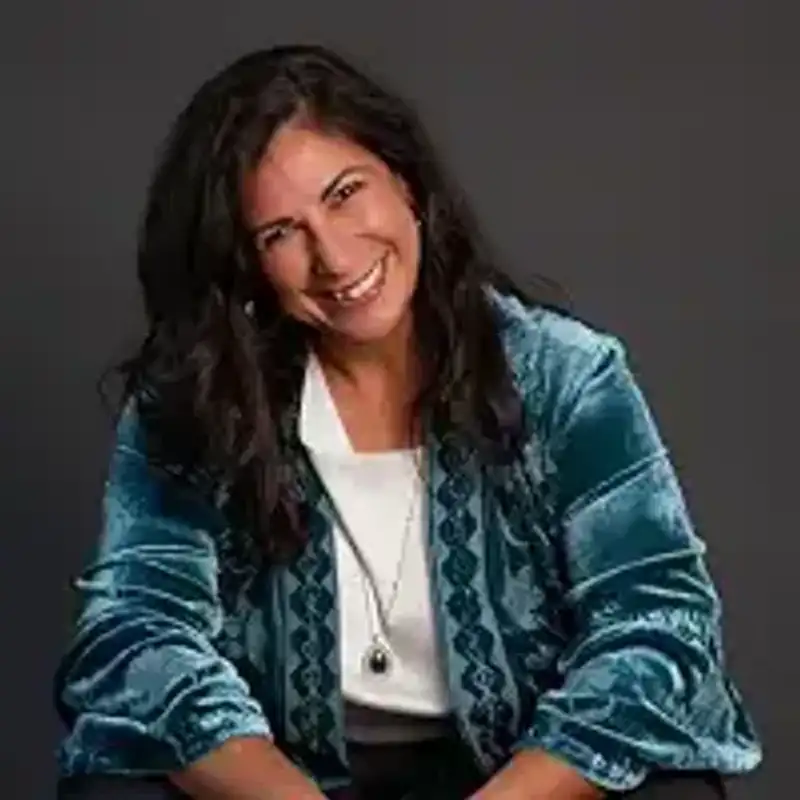
Now let's get communicating with our guest today joining us from this is a first for the show, the Island of Bermuda. Kate Kayaian is an author, speaker, career strategist who coaches us to rethink success, identity and what's next for ourselves. She's a former cellist and wait for this, a Grammy award winner. And today she'll be sharing with us what success really means.
01:26
And before I go any further, please welcome her to the show. Hi, Kate. Hi, Roberta. Thank you so much for having me. I'm really excited about this conversation we're going to have. I'm excited to be in the presence of a Grammy winner. And you will tell us later how that felt when it happened. Absolutely. Yes. So you are in Bermuda. Any particular reason you live there? Because when we spoke, that's not exactly where you were born.
01:55
That's right. I'm from Chicago. And then I spent most of my adult career in Boston and freelance. And I was starting to get to the point where I was traveling all over the place for concerts and I met a guy and he was, he's actually English. He's not Bermudian, but he is a physics and oceanography professor here in Bermuda. And I figured, you know, I'm a cellist. I need a place to practice and I need an airport.
02:23
And they have both of those in Bermuda. So I made the jump. I moved to a beautiful place and built the rest of my career from here. Best decision I ever made. Yes. I love happy endings, especially because like you said, you met a guy because that's a movie is. Yes. And you move Island. So I love that. Now being a cellist, you won a Grammy award.
02:50
Tell us a little bit more about that experience. When did it happen? Yeah, technically I have been part, I can't say that I personally won the Grammy award. Otherwise you'd see a beautiful gold statue there behind me. But um I was part of a couple of different orchestras in Boston, one in Boston, Massachusetts, one in Albany, New York, and was part of some projects that won Grammys. So it was...
03:15
moment full of pride, know, being nominated for it and just thinking back to those recording sessions. In fact, the first one, it had been so long. I wasn't a regular player with the Albany Symphony. And so I had completely forgotten what I had played in that concert. And so I just heard like all of my friends were saying, oh, we've been nominated for a Grammy. And then they said, oh, we won the Grammy. It was so exciting. And I was a little bit jealous. I was like,
03:41
I want to win. I want a Grammy. I want to be part of that scene. And then I got the email congratulating me. I was like, I was on that. But the other times it was a group that I played with a lot, Boston Modern Orchestra Project, and it was just so exciting. The musicians don't actually get the statues, just the producer and the conductor get those. But we each get a beautiful gold leaf certificate saying that we were a part of that project.
04:11
Yeah. Very cool. consider that very cool indeed? I could not imagine just even being nominated, just having your name in those platforms. Would you consider that the definition of success that you put in your 10,000 hours of practice and rehearsing, and then you have this recognition from the industry, I should say? Yes and no. know, Roberta, it's interesting when you asked what it was like, and yes, it was
04:40
moment of pride and exhilarating. But also in the classical music world, I have a lot of colleagues who they created their own projects and they won a Grammy. So they actually have the statue, right? It was like they played a piece or they wrote a piece. And so it's really 100 % their work that won. And so when I say, I'm a Grammy award winning cellist for a long time, it felt really fake. Like, well, I'm not really right.
05:09
I was part of a project that won a Grammy. It wasn't because of me. In a way, it could have been another cellist that was part of that project. And so for a long time, I would say, oh, no, no, no, I didn't really win a Grammy. You can't say that. can't put that on my... an imposter? I absolutely felt like an imposter. But then I started meeting other classical musicians who were incredibly fine players. And they've never come close to being part of a project that could win a Grammy.
05:39
They can't say that they felt that they can't say that they were part of that experience. And it really hit me that no, you know, just because I lived in a city that was full of just the top 1 % of classical musicians were, know, lots of people, you knew lots of people who had won Grammys. It wasn't that big a deal. It is a big deal. And I was part of that. And so it was a really important stage for me to own it.
06:06
To say no, I can say that I was part of that. That is something that I did. whether it was the definition of my success, no. I would say there are certain performances that I did, certain pieces that I played, that I premiered. My overall career, the people that I got to work with, the traveling that I got to do, the places I got to perform, I think overall, that's what I consider to success.
06:33
Right. And the fact that I worked really hard and I reached a certain level, I think a lot of people reach high levels and they don't get the award. um It doesn't mean they're not worthy of it. And it doesn't mean it wasn't successful what they were doing because that's why I want us to zoom in on the success definition. First of all, like you said, you felt like an imposter even acknowledging that you were part of a group that won the Grammy. So then the question is, if you're a cellist,
07:03
What would you write down as the, if I'm successful, this should happen. This will happen. If this happens, then I'll consider it successful. Because a lot of us struggle, no matter the industry, no matter the profession, a lot of us struggle with that. We keep chasing and chasing and chasing. And I'll sometimes ask myself, did we at the beginning write down the, these are the benchmarks by which I will measure if this is successful or not.
07:32
or we just keep thinking, there's more, there's more, there's more. And so we never feel like I've reached it. Yes. Well, I think it's both, Roberta. I think that a lot of us can pinpoint from a young age and we should have a vision of what we are going after. I think that's really important in terms of pursuing and reaching our goals. But then what often happens is you reach certain benchmarks and you say, oh, I, doesn't feel the way I thought it would.
08:00
This isn't as important as I thought it would be, right? I mean, it's not like you visit all of these different countries and then you say, okay, I've experienced them all. I know what it's like to live in them. My goal is to get a job in this city so I can live there full-time, right? This is the version of like just a kid looking at a map saying like, oh, someday I want to go live in France.
08:27
And then they moved to France. They work so hard. They learned French. They learned to cook French cuisine and they get a job in France and they move there and they say, Oh, actually I don't like it so much. I think we have to set goals for ourselves and put those benchmarks in place so that we have something to reach for. We have a reason to get up and do the work every day. We also have to allow ourselves to evolve and to say, okay,
08:54
Maybe that wasn't exactly what I thought it would be. Let's pivot. Let's do something else. Also, you know, in terms of a classical music career, but I think we see it in law. I think we see it, you know, the little kid who decides they want to be a doctor. This is their dream and they work for it. And then they decide that they want something else entirely. We shouldn't be beholden to the dreams that our younger versions had for us, right?
09:23
It's like a jacket that suddenly feels too tight. We wanted nothing more than to wear that jacket. And then we got it and it's not so comfortable after all. And we can pivot and that's okay. That's great. When I was a teenager, there was no place I would rather be at 8 p.m. on a Saturday night than on stage. Wow. Where else would I want to be? You know, I wanted to be such a good cellist that somebody hired me to play a concert.
09:51
And there I am on Saturday night when the cellists who weren't as good were just at home crying because they didn't have a concert to play. You I'm on stage, right? Then I got to the point where every Saturday night at 8 p.m. I was on a stage, missing out on friends' weddings, missing out on dinner parties, missing out on going to a concert myself, missing out on all sorts of things. And I realized like, oh, maybe there's more to life than being on stage at 8 p.m. on a Saturday night.
10:19
And these are things that we figure out as we age, as we experience life. And that's wonderful. It's the beautiful thing about living a life. Yes. And it's also a beautiful thing about living now, because I think there's a lot more options available now than there were in the past before all the technology became what it is today. Like you were saying, you used to miss out on friends' weddings and things like that because you are working on your
10:47
craft, you are in demand, everybody wants to see you every Saturday at 8 p.m. Somebody would define that as success, meaning you are so good, everybody wants a piece of Kate. Absolutely. In fact, when I first had these inklings that maybe I wanted to do something else, maybe. mean, first of all, I started playing the cello when I was four and a half. And so here I am in my late 30s, early 40s.
11:15
questioning whether I wanted to keep doing it for another 20, 30 years. I knew I didn't want to play more concerts. I didn't want to be gone in a different country every week of my life. I didn't want to put more time and effort into crafting a bigger career, right? This is another industry. This is the equivalent of like, do you want your boss's job? Do you want your boss's boss's job? And if the answer is no, then you have to say, okay, well, do I want to keep doing my job for 30 years?
11:44
And if the answer is no, you've got to figure out what you want. And so when I first started having those thoughts of I don't want to keep doing exactly what I'm doing for another 20 or 30 years, that seems really boring. But I also don't want to do more. I started having these conversations with colleagues, trusted colleagues, know, the my inner circle, and they would look at me and they would just say, you can't quit. You've made it. No, you're a definition of success. See?
12:12
Yes, that's definition of success. And it was a we. We have made it. We get to do all of these concerts together, right? You can't quit. Because I think in hindsight, my quitting, they felt like it delegitimized their careers. Right? If I was saying, yeah, I made it, I made it, but it's not so great for me. Right? It's always for me. But they would kind of say, well, if it's not so great for you, maybe it's not, is it not good for me? Like,
12:41
But you did mention earlier when you making the example about the Jagadaya, how does it feel for you? Yeah, because it feels different for everybody. Yes. And so the pivotal moment for me, Roberto, was COVID lockdown. The first one, I had all of these big concerts. had a two week concert tour of the West Coast planned for mid April of 2020 and all of these concerts throughout the summer. Big plans, right?
13:11
I was excited for them, I was ready, all the plans were in place. No problems, no problems. Something was tugging at me that I just wasn't excited about them. I didn't know why. And my last concert that I played during lockdown happened to be here in Bermuda, which was rare. I didn't often perform here, but that March 13th, that Friday night, I had a recital here in Bermuda.
13:33
And we knew that lockdown was happening the next day. And so I got up on stage and I was talking about how, you know, this is going to be one of the last times we can all gather together like this and hear live music. And people afterwards, they said, Oh, it was really touching that you were a little emotional about it. Like we could see how terrible this was for you. And I would kind of laugh inside. Cause what they didn't realize was that if I was emotional, it was because I was feeling deep relief.
14:00
In that moment, I knew I don't have to go on that tour. I don't have to play all those concerts. I don't have to do all that traveling. I can just stay at home. And it wasn't burnout. I wasn't tired. I just didn't want to, but I didn't know how to get out of it. And everybody that I was telling, I don't want to, kept telling me back, well, you have to, you can't quit.
14:25
It made no sense. It made no sense. to the reason I'm highlighting how you feel because a lot of the time, you know how they say our body is always communicating with us. Absolutely. So it made no sense to them, but you were listening to your inner voice. Yeah, you know, I felt really justified in that time and COVID. did immediately by March 20th. I was launching a whole online cello festival. I mean, it was
14:54
mega. It was huge. I did not sit on my laurels. I was very active doing all of these things. And a lot of my colleagues were just kind of depressed because all they wanted to do was perform. All they wanted to do was play concerts. They didn't know who they were without that. They felt terrible physically. They felt sick if they didn't have concerts coming up. And that really told me, I was like, well, I don't feel those things.
15:22
You don't want it that badly like they do. Not at this point in my life, no. At this point in my life, I am feeling called to do something else. And that's okay. I couldn't find any evidence of that. I couldn't find any books about that. I couldn't find any resources that could help me through that moment of here I am in sort of, know, mid-career, a successful career.
15:52
wanting to pivot and do something else, I didn't have any help. I had to figure it all out myself. And so that's why I wrote my book, Beyond Potential, a guide for creatives who want to reassess, redefine, and reignite their careers. It's not just for creatives, it's for anybody who is feeling that sense of, know, gosh, this has been great. I maybe have achieved what I thought was success or what other people, what my industry says is success.
16:22
And honestly, even if you haven't, even if you're like, well, I've been doing this for a while. I'm okay at it, but I think I want to go do something else. This book is going to help you not only figure out what those stories were that that got you where you are, the stories that are keeping you stuck where you are, and the stories that are telling you that you can't pivot and you're going to rewrite those stories, you're going to redefine who you want to be. And then this next chapter of your life.
16:50
and it's going to help you reignite your goals and your time management and get you going to get to that next point in your life. And I wrote it from the years that it took me to get from point A to point B. Let's just break down what anybody who's in that position is feeling going through and the fears that come with one, you know, uncertainty makes a lot of us very afraid.
17:18
At least if you know that I'm a cellist, got concerts booked, that's very certain. You know your bills are going to be paid. You're fine. But the uncertainty of not knowing what's next, even if you have an idea that where I am right now, I want to make a move. So how did you, when you realized that, you know what, these cancellations by COVID, I actually don't feel so bad. There's something else out there for me.
17:48
How did you have that? Was it a confidence? Was it a, I have faith in the fact that something could be better out there. What is it that you were telling yourself? In that moment. So the first thing that I did was I started this online festival. I knew that all summer events were going to be canceled, which meant the top high school and college level students, the most advanced students around the world were going to have nothing to do.
18:15
the great cellists around where their concerts were canceled. So everybody of all of these amazing cellists just sitting around. And I said, let's put them together and do this festival. Everybody thought it was a terrible idea at first when I talked about it, like, oh, I'm thinking about doing this festival. My friends, my colleagues, I kept telling me, Kate, that's a terrible idea. Everybody hates zoom. The sound is terrible. People just want to wait out this COVID thing. They want the summer off. They just want to relax. And I knew that wasn't true. I knew the students wanted community.
18:43
I knew the students wanted to meet these teachers. I knew the teachers wanted to meet students. It ended up being a huge success. You identified the gap and despite the pushback, you still believed in what you wanted to, in what you thought should be done, at least during COVID lockdown. I did. mean, like in hindsight, it's easy to say. Everybody said it was a terrible idea and I did it anyway and it was a huge success. I almost...
19:10
pulled the plug on it at least three or four times. I was terrified. What if it's a flop? And you know, I was working with my very first coach and she would just look at me and say, okay, what if it is a flop? I said, well, if it's a flop, then I'll be embarrassed and people will be gossiping about it. And like, oh, did you see what Kate tried to do and what a disaster? And she's like, okay. And then what? I said, well, I guess eventually they'll get over it. They'll forget about it.
19:40
things will move on. And she goes, okay, and then what? And I said, I guess everything will just kind of go back to normal. And she goes, I'll try. Great. And I was like, oh, okay. Yeah, it's stupid not to try, isn't it? But that was, that became a very valuable exercise, which of course I do with my own clients now. But I believe really strongly that the most common thing that stops people from doing what they want is that they're waiting to feel confident and nobody feels confident doing something for the first time.
20:10
Very few people feel confident doing something for the second time. You might start to feel a little bit less sick to your stomach the third time. And by the fourth or fifth time, the confidence starts to come in. So I always say courage before confidence, right? Even if it's something little, if it's like you're invited to a dinner party and the bunch of people that you don't really know, new friends to you and you might be nervous like.
20:35
Am I going to wear the right thing? Am I going to say the right thing? You what's the vibe? What's the dynamic of this group? And, know, by your third dinner party, they're at your house, right? You become accustomed to it. Yeah. Yeah. I remember the first time I had to put gas in my car as a young driver, I was petrified, petrified that I would do it wrong.
20:57
I mean, it sounds silly, right? But I think this is very common that anytime you're doing something you've never done before, there is that little bit of fear of looking like a fool, of doing something wrong, of it not working out well. It's very normal and very human. But I think so many people take that feeling as a sign that they shouldn't do it. Which is quite sad because you know how much we miss out on without asking, just like a coach asked you those questions, so what?
21:27
So what if it's a disaster? what? So what? We don't, we just, like you said, run with that feeling. We make life-changing decisions on that feeling of fear. Yeah, absolutely. And I'm sure you have a lot of listeners here who are in the corporate space and it goes for like if there's a job opening and you really want it, you think it would be the perfect thing for you. You your skills don't match that job description. You haven't done all of those things yet.
21:57
And so you say, well, okay, I'm not gonna apply. Women are usually guilty of that. Men apply even if they don't fully qualify. One of my best friends, her boss's position came up and she said, I don't think I'm gonna apply for it. I said, why not? She's like, well, I don't think I'm completely qualified for it. And I texted her back and I said, okay, I want you to stop and I want you to think.
22:21
of all of the men around who are going to apply for that job who are far less qualified than you are. One of them is going to get that job. And they're going to walk into that interview room more confident despite being less qualified. Yeah. And so she said, you're absolutely right. She said, she got the job. She is crushing that job. She is amazing, right? Of course she is. So yeah, I think we have to live our lives according to this idea of
22:51
showing up with courage in these moments, whether it's something that you want to do, something you want to try, an idea you have speaking up, show the courage. The worst thing that can happen is not so bad. The worst thing that could happen is not so bad. The worst thing that could happen is not so bad. So please try. If your clients come to you, Kate, and they want to make this transition and these fears are
23:20
literally making them think there's no way I'm leaving this behind, even though I literally get sick to my stomach every morning when I wake up. When they come to you, what is it that is their biggest fear or is the one thing that holds them back the most? Why are they not giving themselves permission to try something new? More often than not, it's some story that whether they realize it or not, they've been telling themselves or they've been hearing in their head.
23:50
Right, now it could be, and this is one that came up temporarily, it would pop into my brain of, Kate, cello lessons are expensive. Your cello was really expensive. Who are you to quit? What a betrayal to your parents who sacrificed and spent all of this money so that you could be a cellist. What about your teachers who poured their heart and soul into mentoring you and helping you?
24:18
to get to this level. Everybody invested so much in you and you're just gonna say, eh, no thanks. Really? All of that is true. And that was a story I was telling myself that my cello lessons were expensive. My parents did work hard and sacrificed a lot. My poor brother probably went on fewer family vacations because my cello lessons were so expensive. All of that stuff is true. But the story I was telling myself that was
24:47
keeping me stuck was that they would feel betrayed, right? I was so stuck in that they will feel betrayed. Quitting would be the absolute betrayal. One day it occurred to me, like, okay, I've had students that I have poured my heart and soul into and they are off starting these great, fantastic careers. If they came to me one day and said, actually, I think I wanna go to law school, I'd be like, that's great, good for you.
25:17
You won't feel like it was a waste of time that you invested all that time coaching them. No, not one cell in my body would feel like it had been a waste of my time because when you're doing that kind of work, you're helping somebody become the best version of themselves. It's not just about the cello playing or the music or whatever it is you're mentoring that person. You're teaching them to believe in themselves. You're teaching them how to have discipline, how to work in such a way to reach a goal.
25:47
how to listen, how to relate to people around them. We're teaching them life skills, not just how to play an instrument. And I think it's like that with any mentor-mentee relationship. It has nothing to do with the actual skill involved. It's everything else. So I would be so proud of that student and everything that that person had become and so thrilled that they had.
26:12
come to some realization of what they truly wanted. If it wasn't music, it was law, they had some passion for it. I would think that was the most wonderful thing in the world. Flipping that perspective around can be really helpful tool to get you unstuck in your old stories. And please share with us a strategy on how to start unpacking those stories. Because a lot of what you shared today based on the stories, especially with the one about
26:41
know, growing up all the sacrifices made for you to be a cellist. How many people listening are telling themselves different stories in relation to that? And why they not giving themselves permission to try something else that might make them happier, more fulfilled. Yeah. Well, I'll share with you the basis of my book and then I'll give you the exercise that goes along with it. The basis of my book is this idea I heard in a podcast that
27:08
If you were to die and wake up in heaven, the first person you met was the version of yourself that did all of the things you want to do. Ooh. Yeah, that's everybody's response. It's like a visceral immediate, like, oh, ooh. Right? So I want everybody listening to just go through that idea and imagine what that person is.
27:32
Maybe they're wearing a medal because they just, they ran a marathon, right? They're wearing all of their marathon medals and they speak fluent Italian and they make uh the most amazing chocolate souffle. All of these things, right? Make a list of what that version of you has done and what they haven't done. Because when I thought of that version of myself, I realized they were not a world-class concert cellist.
27:59
They hadn't won all of the awards that I had been trained to want to win. That wasn't what that person, that wasn't what that version of me was interested in. So I want you to make a list of what comes up with that exercise. And then I want you to ask yourself why you don't have those things. um Okay, that let's stick with the marathon, right? Cause it's easy. Everybody knows what a marathon entails. So the version of yourself has like,
28:28
three marathon medals around their neck. You say, okay, why haven't you run a marathon? Well, I'm not very athletic. I've never been a very good runner. It sounds like a really cool thing. I, you know, I would love to do it someday, but I'm just not a good runner. I'm not very fit. Or maybe it's maybe you are perfectly fit and you do love to run. I just don't have time to train for marathon. So I want you to take all of those excuses, all of those stories that are coming up because that's what those are. Those excuses are just stories. So if the story of
28:58
I just don't have time to train for a marathon. Why not? Could you rewrite that story? Is there something that you could do to change that story? Listen, I get it. I mean, I don't have time because I have a newborn at home and I'm nursing and I'm up all night, right? Like, okay, legitimately, maybe you don't have time to run a marathon right now, but what can you put in place in the future, in the not so distant future, to get the support you need so that you could start training for a marathon when that phase is over, right?
29:28
Maybe it's, um oh, I've never been good at math. And then I want you to think about why you think you're not so good at math. Well, you know, I failed algebra in high school. Okay. Why did you fail algebra in high school? Well, I hated my teacher and he thought I was stupid and he wouldn't give me any help. oh, you didn't have a great teacher that year in that class. Maybe a different teacher would have really helped you and it would have clicked in and you would spend the rest of your life thinking you were really good at math. Right.
29:58
So really digging in and doing the detective work, you know, it's not quite therapy. it's, you know, trauma-based, please seek a professional therapist to do this work with, of course. But if it's just stories about your behaviors, why you behave the way you do, this can be really eye-opening. You could say like, well, okay, everything's online now. I could just do Khan Academy. I could learn algebra now as an adult. Can't be that hard. Like there are eighth graders that can do it. Right?
30:27
Right. And so yeah, just really digging in and questioning those stories is the first key. And I think the most important key, and I think honestly Roberta, it's the step that people skip. Right. They go straight into, I want to run a marathon. And then they just buy some shoes and run out the door. And then the first day they get busy, right? They're like, see, yeah, I don't have time to do this. They need to rewrite the story first.
30:57
and set themselves up for success. Set themselves up in that mindset of, I'm gonna show up with courage and I have figured out how I can do this and why I wanna do it and what was stopping me before and I'm not gonna let those stories stop me now. Show up with courage, don't let the stories stop you. And just like your coach asked, so what if, so what? So what if, what if it flops? What if it flops and then what?
31:27
And then what? Yeah. Very, very important questions. Kate, this has been very eye opening. Thank you so much for giving us permission to question ourselves and the stories we tell ourselves, because there's so much that we can do out there beyond potential. Absolutely. Thank you, Roberta. My absolute pleasure. Before you go, do you have a website where our listeners can reach you?
31:54
I do. It has everything there. It's Katekayaian.com. It's just my name and it's got all of the information. You can listen to the website. You can find the book. You can get more information about coaching, hire me to speak. Everything's on there. So it's one-stop shopping, Katekayaian.com. And if you want to say hello, can find me on Instagram at K-K-A-Y-A-I-A-N and just say hello. Tell me you found me here and I would love to hear what you're up to.
32:23
Yes. Please tell Katie found her on the speaking and communicating podcast. Yes. Katekayaian.com the host of the podcast Tales from the Lane, author of the book Beyond Potential, author, speaker, career strategist, former cellist and Grammy award winner. Thank you so much. As I said, for giving us all these strategies and most importantly, for redefining success for ourselves. Thank you, Roberta.
32:53
My pleasure. Don't forget to subscribe, leave a rating and a review on Apple and Spotify and stay tuned for more episodes to come.