How To Be A Presentation Rockstar w/ David Thomas
and it is utterly dependent on the audience that you're speaking to. So when I was preparing somebody to speak in the House as a parliament, going in and being angry and trying to get a negative response from the MPs and make them feel some pain doesn't work. They are members of parliament. They get that all day, every day on the street, but you've got to make them feel something. If they don't feel something, your audience...
00:23
They're not going to change. Welcome back to the Speaking and Communicating podcast. I'm your host, Roberta Ndlela. If you are looking to improve your communication skills, both professionally and personally, this is the podcast you should be tuning into. Communication and soft skills are crucial for your career growth and leadership development. And by the end of this episode, please log on to Apple and Spotify and leave us a rating and a review.
00:49
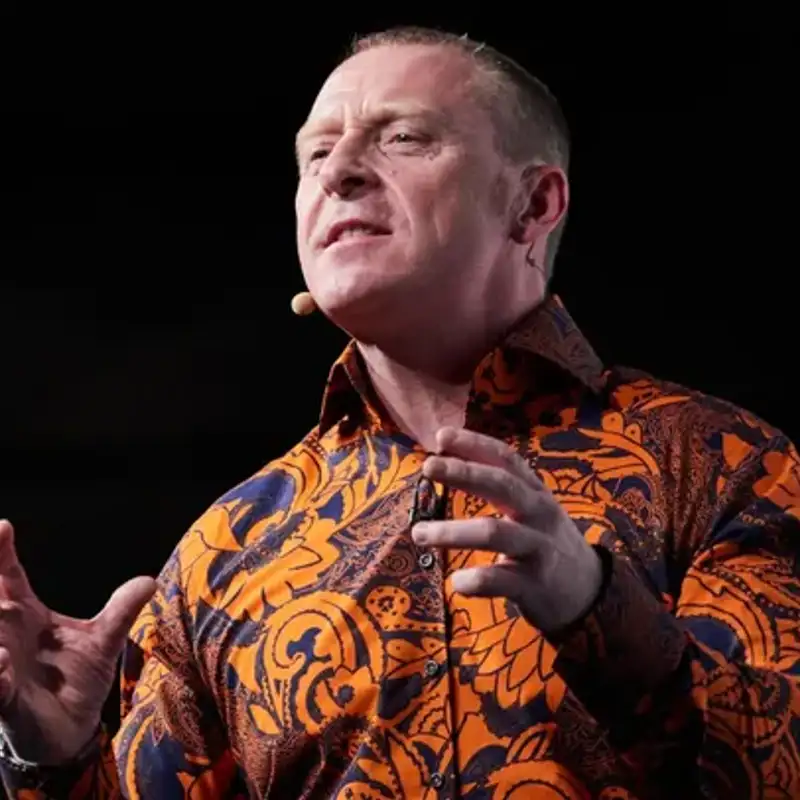
Now let's get communicating with our guest today joining us from the UK. David Thomas has been a coach for 15 years, turning leaders into presentation rock stars, making sure that they are not vanilla in their presentations. And he's also worked with British prime ministers. And before I go any further, please welcome him to the show. Hi, David. Hello. Good to meet you, Roberta.
01:16
I'm so glad to meet you as well. Welcome to the show. I'm very intrigued by the fact that you've worked with members of parliament because guess what? There's not a more boring crowd when it comes to speaking. I'm going to correct you slightly. What I did was I worked with a client of mine who had to present to MPs and law. So it was a client of mine who was coming, he was trying to get the law changed in his industry. So he had to go to the houses of parliament, British houses of parliament.
01:45
and present to 300 lords and MPs. So it was a tough gig. Also, there was alcohol involved because it was an alcohol-based industry. So it was an evening. There were MPs where they'd been working all day. Their attention span is fairly small and there was free cider. It was a great challenge, an interesting opportunity. It's unusual. It's an unusual type of talk because normally I'm working in the commercial sector, but this was much more about working in the government sector.
02:14
And by the way, this is not taking a dig on the UK ones, because trust me, South African parliamentarians are even more boring. But let's get back to what you say about sometimes you may listen to a leader giving a presentation and they're so vanilla. What do you mean by using the word vanilla in that instance? I just mean they're boring. They are boring and they are forgettable. And I do this every time I speak. did it with a client yesterday in Dublin, in Ireland. said,
02:43
So I had 10 people, leadership team, I said, how many presentations have you seen since you were 18, that first one in your first day at work? And it's probably hundreds. And I go, think of the top five. And they go, okay, they were great. Think of five more, get 10. And they start to struggle. Get 20, and they can't do it. And I'm like, that means that 90 % of the presentations you've seen are not bad, although some of them would have been terrible.
03:11
The main problem was that they were beige, vanilla and forgettable. My belief is that every time we stand to present, even if it's a one-to-one appraisal, we really have the opportunity to change the lives of the person who's listening. And the fact is that being beige, vanilla and forgettable doesn't achieve any of those goals. It doesn't. But the thing is the person on the other end, the one thinking...
03:36
Okay, my job is to present this information, make sure that everybody knows what they're supposed to do after this. And then I would just check, you know, it's a checklist thing of, yeah, I've given the information. So do they actually wonder if after this presentation, will I be remembered? Am I going to be forgettable? Am I vanilla?
03:59
Do we sometimes see it as a to-do list item rather than working on it so that it is a memorable presentation for the audience? Yeah, I think most leaders, I only really work with leaders, but almost all of them just sit there and look at it as a lecture to give. And the thing is, they don't want to do that. This is the crazy thing. Because if you say to leaders, you say to anybody, what kind of presentation do you want to hear? Do you want to hear something that's inspirational, motivational?
04:29
educational, they want to learn something, they want it to be fun, if it's appropriate. And yet then when they stand up and do it, they don't do any of those things. That's a challenge to face. And so I never really quite work out why, but I think they just get a bit nervous. They're a bit worried about what people will think. They think they have to be over professional because they are the boss, part of the leadership team. And so what they end up doing is just doing it something that essentially could be sent through on a PDF.
04:56
And that's what I always say to people. If you're going to do a presentation, even if you've got something that you've got to share, something that's more procedural and a bit more boring, a bit more technical, it doesn't mean to say that you have to deliver it like you're reading a book. Cause if you are reading a book, give them the book, put it in a book and give it to them. But if you want to make sure that they remember what you said, they engage with you. And also what's the high end point of any presentation. It's gotta be to help people move forward from where they are.
05:25
And we know that when people move forward, it isn't just knowledge because knowledge now is free and it is everywhere and it is instant. So standing up and telling people stuff they can learn in 10 minutes on a YouTube video is crazy. You've to bring in the other stuff, the motivational stuff. Maybe you can agitate, motivate isn't always you can be amazing. It can be you're not achieving what you should. There's a gap between where you are and where you should be.
05:53
You know, create a bit of pain in the audience, a bit of fear. I don't care what it is that you use, whatever tool, as long as it's appropriate for the audience and the talk you're giving. But they are the things that make people walk away and go, I need to be different tomorrow than I was yesterday. So bring out some form of feeling as you're making a presentation to the audience. They need to feel something. Oh, they do. You know, if at the end of the presentation, they look at you and then they go, brilliant, where's the coffee?
06:23
I hope they've got some lovely biscuits. They some great cakes at break. I hope they've got some great cakes this afternoon. It's like, I've just been stood there for 40 minutes and all you care about is what cake is coming out. That is heartbreaking, right? So they've got to have an emotional response and it is utterly dependent on the audience that you're speaking to. So when I was preparing somebody to speak in the houses of parliament, going in and being angry and
06:53
trying to get a negative response from the MPs and get stuck into them and make them feel some pain doesn't work. They are members of parliament. They get that all day, every day on the street, right? They just get hammered by the public on social media, even face to face, just giving them a hard time. So standing up there and giving them a hard time in the parliament, that's not gonna work, but you've got to make them feel something. If they don't feel something, your audience,
07:22
They're not going to change. Let's go back to the part where you said sometimes leaders have this idea that they need to sound professional and hence they become boring and vanilla. All the things we talk about when we say, uh know, David, have you mind your presentation, have a story at this part, make it interesting, make them feel something. We have this misinformed idea that those things make you sound less professional.
07:51
Because being professional means you're very straight-laced, everything is presented in a perfect way, nobody's laughing and everybody's serious and wearing a suit. That's the idea. Yes. I think storytelling is becoming much more the norm. We understand if you're doing a YouTube video, if you're a presentation on a Monday morning to this team, you've got to have some kind of storytelling. And if you don't, then you're going to struggle. The biggest issue I find and the biggest challenge I face when I'm working with clients is getting them to put humor in.
08:20
Because we all want to have a bit of fun. We don't want it to be so unremittingly dark all the time. Even if the other day I was thinking about it, what kind of presentations can you put humor in? And I think there's only one way you can't. And that is if you're standing up and sacking people, if you're making them redundant, making them unemployed, humor is deeply inappropriate on almost every other one. And people are desperate to have some fun. Just a bit fun.
08:48
bit of release, bit of a giggle, bit of a laugh. The problem is, that's the biggest one. So storytelling not so bad, but humor. They just go, people will think I'm a clown, that I'm trying to get the attention of the audience. And so those self-limiting beliefs, and I had this yesterday, they go, but if I'm just gonna start doing humor, I'm not a comedian, I'm not this, I'm not that, I'm a serious guy, people don't wanna hear that. And then they go, do people really wanna hear a humorous anecdote?
09:17
about something that happened in the supermarket last week and they go, yes they do. Cause it happened to them, it's a connection, it's relatability. It's going, yeah, that happened to me. I mean, I have six grandkids and five kids. You know, I've got stories coming out in my ears about those kids and the things they say and do. Cause it's just hilarious. And everybody sits there and goes, I've got one of those kids at home. And it's just a great point.
09:45
It's a wonderful thing. So yeah, the greatest challenge is getting particularly senior people to just let go of the reins a little bit and tell a few stories. Tell a few anecdotes. Might be serious story or it might be funny story. Bring a bit of humor into it. Bring a bit of life. And there's nobody in the audience who goes, you know what? They run professional. The moment they hear a story, everybody just leans in. Right. Cause they want to hear, they want to find out what's going on. Where's this going? I'm interested. But
10:13
giving them the five points of the mission statement. Well, just punch me in the face now. That's nice. Boss, we can read it up on the wall. oh Because here's the thing about humor as well. I don't know if sometimes, you know, when people are presenting and David teaches them about humor, they think the entire speech is supposed to be humorous. We're not asking you to be a comedian. That's not what this is about. And we're not saying turn every...
10:41
idea that you are presenting to be humorous. you can't, whether you start with something funny, but you can add humor during appropriate moments, it doesn't mean that be so against it because to you, it just sounds like, oh, I don't want to turn into a comedian. This is serious. This is business. Absolutely. But you can put in more than you think.
11:05
So one of the greatest presentations of all time is a Ted talk in 2006 by a guy who unfortunately now has passed away called Sir Ken Robinson. And it was called Do Schools Kill Creativity? And it's had getting on for a hundred million views now across all platforms. And it's considered the benchmark for Ted talks, which again is considered one of the greatest speaking platforms in the world. And I went back and I always say to people, if you watched it and that puts some people go, yeah, I've watched it. I go, what do you think?
11:35
and they go, powerful. And it was funny. And I was like, how much humor went in? So I went in and it's 18 minutes long. And what I did was strip out all the bits that were pure humor. And it was a third. So this is the biggest platform in the world where people are paying eight, $10,000 to attend this event is speaking on the same platform as world leaders.
12:01
you know, amazing thought leaders, the greatest minds of our generation. He stands up and his talk gets more views than anybody else's. And a third of it was humor, just raw humor. And so the thing is, I'm not saying that is a benchmark. You might want to put less in, but generally speaking, what people will do is they'll speak for say 60 minutes and they'll have 30 seconds of humor. You can put more than that in. You can put in five, six, eight, 10 minutes. It's not all at once.
12:29
It's just dropped in here and there as a nice little funny comment, an ad lib, a point made here and there on the end of a sentence at a certain point or a little anecdote just to break it up. But you can use more than you realize. The relatability factor, because at the end of the day, you want to connect with your audience. Like you said, if you tell a story about one of your grandkids, someone in the audience with grandkids will say, yes, I have one of those. It's relatable.
12:56
And it makes them even more interested in listening to the rest of what you'll be talking about that day. It does. And even just little things. I went into a shop about six months ago in my hometown and had some rugs and they had one on the wall and I liked it. So I said to the girl, what size is that rug? she went to it six by six. I went, it's not square.
13:21
No, I said it's not square. She wanted six by six. It should be a square. And then I decided it's not square. And she looked at me. went, then it's not six by six. So I just burst out laughing. So I burst out laughing. And then I looked at her and she went, I'll get a tape measure. I went, that's a really good idea. And it's just, it's just a stupid, silly thing that happened in a rug shop in town.
13:51
But you tell people and people just laugh and they go, I've met people like that. just think it's funny. So I tell, was starting to put a keynote speech at Wembley the other week in front of hundreds of people and I'll tell the story and like 400 people just burst out laughing. oh And they go, yeah, man. What I'm thinking right now is how many people has she said to six by six and they take that too hard.
14:19
Because you have to know your basic geometry to know that hey, a square all sides are equal. So if you calculate the area of a square, it's six places. I know. And you just think how many people got a rug and took it home and they're going, this doesn't fit. She said it was, she said it was square. I don't think it's square. You know, and the thing is, it's not like a massive major meeting, somebody important, crazy event.
14:48
It's a little thing. And we all do that. We all go in the supermarket every week and see something crazy. And people think, people they got, they don't care. They do cause that's all of us. It's all daily life, isn't it? And those are the things that just make us, are just fun and interesting. Getting somebody who's a senior leader, who's a chief exec, managing director in the C-suite, getting them to just let go of it. Just let go of the reins, relax.
15:17
You don't have to be mega relatable because the one thing I always talk about is that when you as a, if you're a leader in presenting, you're a leader for a reason. You're not one of the gang. So the fact is that when you stand to present as a leader, you've really got to your space, push your shoulders back and act like you're in charge because you are. But at the same time, just those little moments of connectivity, people go, okay, this is a real person. You've worked with over five.
15:46
hundred thousand people in the span of coaching for 15 years. What have you found when they first come to you David and they need help with their presentations? What have you found are the most common challenges they say they face and they need to work on? Two things. They don't know what good looks like. You know, you see somebody at a conference and you're looking at them and you're going, they are brilliant. And then you go, but how did they do it? I don't know what I don't know. It's like, I could see the good.
16:16
So they're not sat there going, oh, I'm a really terrible speaker and I need my confidence building up and I have no idea what I'm doing. I work with people who are middle management and above. So they've been speaking. But they sit there and they're going, I know I'm okay. And I can see that person on stage is amazing, but how do I get from there to there? And then the second thing is they just have no idea about structure. No idea about structure, Roberta. The first 60 seconds are the only 60 seconds that count.
16:45
Mean you've just got to be out of the blocks like a grand with its feet on fire You've got to get their attention get it from a to get it up to an eight Otherwise, you know the rest of the talk is for nothing in that 60 seconds. You're gonna stamp your credibility You've got to say something that's gonna make them go. What did he just say? What what you've got to get them out of that inertia? You know tell stories if it's a 20-minute talk. It's not 20 minutes. It's one minute at the beginning. It's one minute at the end
17:14
The other 18 minutes, it's nine, two minute blocks. It's understanding bite-sized chunks. Where do you put in? And if you're going to talk about your company, nobody cares about your company. Nobody, nobody cares about how many offices you've got or how many staff, but you might think you need to put it in, put that in the middle of your talk. Cause that's the death zone. If you've got 20 minutes or the bit, then remember the least is in the middle. All of that is just basic, simple structure. And when people come to me, they go, I didn't know any of that.
17:44
And that's what I share. So my job is less motivational. It's more about what's your desired outcomes. Let's find your lightning rod theme. What's the one thing you want to talk about? So I worked with a company, the guy was speaking in Chicago. He was a keynote speaker at a major convention and his company has been going for 120 years, which is nearly half as long as the entire United States. So he's speaking in America. So his lightning rod theme was not the product. It was heritage.
18:14
Because he was fourth generation owner of his business, right? So what does heritage do it gives you these three buckets underneath it gives you knowledge and It gives you you know history and clients and everything else. So, you know, they understand it then it's more like putting together a Lego puzzle It's a jigsaw, know, it's like where do the pieces go? Well, we need to get the outline in we need to lighten up theme We get these three points. We keep coming back to those
18:41
You know, your slides have got to be minimalistic. You've got to have more images, less words, no bullet points. I don't like bullet points. And they got great. So when they come to me, they're not super nervous. Usually it's the other way around. They want to do really well. And they go show me how to be. That's why I taught my business is called powerful presenting for leaders. But my tagline is creating presentation rock stars. And when I first came up with that phrase, I thought, this is really cheesy. I thought, no, I'm just.
19:10
Everybody's going to go, what do you mean? That's you can't be a rock star. tell you now, Roberta, 50 % of my new clients get in touch and they go, make me a rock star. Cause the leaders, they want to stand on stage and be Mick Jagger. do, you know? So I've got, I'll do my best. That's where we're going. I mean, I'm great at words. It's about keeping things punchy and tight, not going off at a tangent timing. Honestly, Roberta, I don't know how many people.
19:40
overrun, but the last few big conferences where I've been the keynote speaker, I'm thinking 80 % of people overrun. And so the thing is, how do you manage your time when you're in the middle of a conference and there's 10 other people speaking? So we have strategies and processes for that. So what they want is they want to know from somebody like me who's done it for 30 years in 60 countries, where are the problems? How do I overcome this? What is best practice?
20:08
You know what, I'm so glad you explained it like that because I think a lot of the time when you talk about a presentation skills coach, people usually ask, how do I get started? But I think that your clients have this level of self-awareness of where they are. And like you said, they know what the desired goal is. So when they come to you, they know the things that they want to work on or improve on. I think that alone makes them five steps ahead than the person who goes,
20:37
Oh, I want to be a confident speaker. It sounds a little generic when you say it like that, but when you say, you know what, I've been presenting David, but I watched this keynote speaker the other day and I wanna be like that. You see, I know where I am. I wanna get there. Then it makes it very clear on what it is that you're working towards when they come to you. Yes. Now do occasionally work at the other end of the spectrum. So literally today,
21:06
Two hours ago, I was doing a Zoom with a guy and there's a firm that I know, a company I work with, and what they do is they have apprentices. So these are young people between ages 16 and 21, and every year they take on between five and 10. And they make, in air quotes, they make these apprentices who've never done a presentation before stand up in front of the board and do a five minute presentation on how to improve the company. It's wild, right?
21:34
So these are raw kids out of school, no university or college education. And now they're going to have to stand up in front of a board and their families next Tuesday. Right? So the other week I'm in the company, there's five of them. spend the whole day together and work on their presentations. That is a very, very different challenge at the other extreme. They are super nervous and they have no idea how to put a presentation together at all.
22:01
So that's what I do. So I sit down with them and I go through it and I explain what they need to do. They've already done some slides. They've got an idea. So we worked together. And then like today, what I did was all the kids go away. I call them kids because they're 40 years younger than me, they're 30 and 30. So they all disappear and then they come back and we do a zoom and we go through the slides. And that's what I've been doing today. So occasionally I do work with people at the other end of the spectrum, never presented before, no idea what it looks like, zero idea.
22:30
And my job then is to be a lot softer and work on the more basic elements of how to put it together and build up their confidence. So the other week when I worked with them, were five in the room. One was only fit for purpose. There's only one who was good enough to stand up and present it to all. By the end of the day, I got three more up to standard. And then the other person I'm helping him, you know, we've got some coaching for her too. It's about building the confidence and going more to basics. But in essence, I'm working with people.
23:01
higher up the food chain. Which proves that it is a skill and anybody can learn. I've got the best two videos ever in the history of speaking and I'm going to share these with you. To me one of the best speakers of last 20 years 30 years is Barack Obama. Not only is he a good speaker but he can do it across the board. So if you look at Obama he's good at the statesman type talks, states of the union in front of Congress, he's great on a chat show and he's good at humor.
23:28
So if you look at the White House correspondence dinners that happen once a year where basically it's like a comedian's routine, he's incredible. He used to be incredible. And then a few years ago, somebody came to me and said, were chatting and they said, do you think he's always been that good? went, well, probably. I mean, he's always been disgustingly handsome, right? And charming and charismatic and all that other stuff. And I went and found a video of him speaking when he was 37 years old.
23:57
He was shockingly bad. Oh. And I it every day of my working life. He's doing a, it's a talk in Chicago. He's doing it in the public library. It's a book that he's written about his dad, his relationship with his dad. dreams for my father. And he's like, so, yeah, right. Well, I'm here to speak today and yeah, it's, know, Colin Powell is here today.
24:24
And you know, I don't think I'm going to struggle him to get some of his, you know, and, uh, you know, I don't think he's going to be worried. know, I've written this book and, uh, and, and I'm going to share it. And that's what it was like. That was the start. And it was like that for 50 minutes. It's wild. Yep. I'm not exaggerating. I am not exaggerating with Roberta.
24:49
I will send you a link to the video. And every time you do it, you work with anybody, show them those videos. So I've got one of him in Chicago when he won the election and he's amazing and beautiful and you know, beautiful speech. And then there's this piece of footage from 15 years before. It's a literal before and after. It's so mind blowing. You can't not watch it 10 times in a row. You can't believe it's the same human. Nowadays you go, it's got to be AI. I found this 10 years ago.
25:17
before AI. Which gives hope to anyone who thinks I could never do it. Yes. And that's why I'm working with these leaders yesterday. I'm trying to build up their confidence. You can do it. You can do it. You can do it. Do it. And you know, the last, we spent eight hours together yesterday. The last thing they see at five minutes to five before they go at five are those two clips. I show them a VARMA afterwards. Then I show them before and they all sit there like mouths open, can't believe it. And I go.
25:45
All of you at nine o'clock this morning were better than Obama was when he was 37. Bearing in mind, he was a professor of law at Harvard at the time. He wasn't a kid. He was 37. He's talking about something he's passionate about, a book, his relationship with And he was all over the place. It's awful. And it's great because the thing is, I'm not doing it to give Obama a hard time. I'm doing it to prove a point. No, no, no. It shows that anybody can do it. Yeah, this is very important, actually. But also, Roberta, I'd love to know your opinion.
26:13
And you can disagree with me all you want. But I think that if you saw those two clips and I know I've just explained, I don't believe he went from amazingly bad to brilliant organically. I think he did it through No, I'm sure that he had coaches. I'm sure he had coaches like put my money on it. That's the only thing I say to anybody that I bump into and that I work with, I go, you know what? We're not all going to be Obama, but I'll tell you what, we can be bloody good.
26:42
If we just knuckle down, learn some techniques, learn some strategies, practice and apply them, get a bit of coaching, just watch YouTube. I don't care, just do something. Don't think you're going to get better on its own because it's unlikely to happen. Tips and tricks and some techniques and strategies, and you go out and apply them, you can become way better than you think. That is very true. Obviously he had coaching, but also I think that, like you say, you coach those who are in management and in leadership.
27:11
When you know where you want to get to, we talk a lot about how career professionals, if you want to get to a certain level, these are the communication skills you need to get. He knew that at some point he wanted to run for president and he knew that there's nobody who's gonna listen to him when he sounded like that when I started with the book. He knew that he had to find coaches to help him speak. It's the same with if you're a professional or an entrepreneur. If you know that I want to get my...
27:40
innovation into the market. There's a certain level of speaking and coaching that you need in order for people to listen to you. If you know where you're going, you at least come to David and you say, this is what I want as an end goal. How do we get there? How do I present? How do I become a presentation rock star? The thing is you're only going to get so far without good presentation skills. mean, Elon Musk is an awful speaker and he
28:08
is worth nearly a trillion dollars. So you're always going to get the outlier. You're going to get somebody who can get there by sheer force of personality and everything else. But the rest of us, the rest of us, we need to do the work. We need to have those presentations. And if you're a bad speaker, chances are you're not going to get to where you want to be. And a lot of it is so fixable. You get a course, you learn some skills, you go to toastmasters, just do something.
28:36
And it is amazing. And for me, I can remember about 12 years ago. Now it's a while back. I'm in the gym and I'm lifting and the guy just said on the machine next to me when you're on the train to London the other week, I went, yeah, I was doing some work. I said, what were you doing? He says, I was going for an interview. I said, how did the interview go? And he said, went brilliant. I got the promotion, but they told me something really interesting. He said, they told me that if I didn't improve my presentation skills, I wouldn't get to the promotion above.
29:05
Now he had no idea what I did. I'd never spoken to him before. I said, well, as it happens, I'm a coach. So if you need some help, give me a shout. Five years later. approached you not knowing that that's what you do. No, no, we just, you know, you're chatting to guys in the gym and he no idea. Wow. And five years later, I was in the gym and he went, I need your help. He says, I'm going for one of the top five jobs in Microsoft in the UK. It's 3000 people in the UK. It's one of the top five jobs. I need your help. So I went to his house. He lives near me.
29:33
We sat there and we worked on it and he got the job. And he said, I wouldn't have got the job if I hadn't worked with you. But it wasn't necessarily working with me. It was working with a coach. He'd have found another coach. But I thought it was really cool that when he went for the promotion with the other company, they told him, you need to improve your presentation skills. Cause many, many companies wouldn't. They just let you fail and not give you the promotion. But I just- Even when they do promote you, David, they don't give you those tools and you become this vanilla litter you were talking about earlier.
30:01
And a lot of the time that's what a lot of them face as a challenge that, yes, it comes with the job. Now that I lead people, need to present to them, but I never got the skill. No. And what you find is they get quite a long way without any help. And then they end up in kind of no man's land where they're good enough, but not great. They don't know what to improve, but nobody's telling them that they're rubbish.
30:30
So they just kind of floating around and that's the dangerous spot when you kind of think you're better than you are or getting away with it. And then all of a sudden you get the chance or the opportunity to go up to the next level or you get a big speech and you think, yeah, I can do this. And then it kind of falls a bit flat. And then what you ended up with is just this sea of beige and vanilla presentations that leaders do. I just think it's a real shame.
31:00
It certainly is. Anyone listening, David, and wondering where do they go next if they know that they want to be a rock star, if they know that their presentation skills uh are not yet up to par? Well, they need to get in touch with me, Roberta. That's what they need to do. Yes. So my website is creatingpresentationrockstars.com and I'm on LinkedIn.
31:29
David Thomas, creating presentation rockstars. So come over, I post on LinkedIn three or four times a week, lots of tips, ideas, tips and tricks. And then if you wanna get in touch and have a chat, maybe do a bit of work together, then just go to my website and my contact details are there. Creatingpresentationrockstars.com, that is David Thomas, who's worked with over 500,000 people helping them become.
31:56
presentation rockstars especially leaders and managers David you were in the Guinness World Record book? was yeah I did it I broke a Guinness record nearly 30 years ago. Wow. Or? Reciting Pi. Do you remember Pi from school? Yes! So I recited Pi to 22,500 digits. Excuse me the 6 by 6 square was the least of your problem.
32:25
Yeah, 3.14 and I did it to 22,500 digits 30 years ago. goodness, 22 over 7. Thank you, David, for the work that you do and helping us share strategies on how to not be boring presentations. Thank you for being here today. Thank you. My pleasure. Don't forget to subscribe, liberating and a review on Apple and Spotify and stay tuned for more episodes to come.